
Best Material for Dental Crowns in NZ: How to Choose in 2026

The strongest-sounding crown material isn’t automatically the right one for your tooth. The best material for dental crowns NZ dentists recommend depends on where the tooth sits, how you bite and what matters most to you.
Names such as zirconia, porcelain and metal can be difficult to compare, especially when online claims make one option sound best for everyone. A crown is a clinical match, not a universal choice. The recommendation needs to account for your tooth and bite, as well as your priorities for appearance and function.
This guide explains common crown material categories and their practical trade-offs, then outlines the personal and clinical factors a dentist may consider. You’ll be better prepared to discuss suitable options as part of a personalised treatment plan at Dental Plus, which provides restorative dentistry, including crowns, in Mount Maunganui, Tauranga and the Bay of Plenty. This article is general information only. A dentist’s assessment and professional advice are essential when making decisions about your dental condition.
Table of Contents
What does dental crown material affect, and why does the choice matter?
Which dental crown materials are commonly compared in New Zealand?
Is there one best material for dental crowns in NZ? Compare the trade-offs
How can you prepare to choose a crown material with your dentist?
Choosing a dental crown material in Tauranga: discuss your options at Dental Plus
What does dental crown material affect, and why does the choice matter?
A dental crown is a restoration made to cover a tooth. It fits over the remaining tooth to restore its shape and provide coverage when a filling may not be enough. Crowns can be made from different materials, each with its own appearance and practical characteristics. A general overview of dental crown restorations shows the range of material types, but a list alone can’t tell you which option suits a particular tooth.
Material choice can affect how closely a crown matches nearby teeth and how well it suits the tooth’s role. Appearance may be a priority for a visible tooth, while a tooth used for chewing raises questions about bite and everyday function. These considerations overlap. Your dentist will consider the tooth’s condition and position, how your teeth meet, and what you value in the result.
The most suitable crown material depends on the tooth and a dentist’s clinical assessment. There’s no reliable shortcut based only on a material’s name or a broad online claim. The comparisons in this article are general information, not an individual treatment recommendation. A dentist can examine the tooth, explain the findings and discuss which options may be appropriate for you.
When might a dentist recommend a crown?
A crown may be considered when a tooth needs more coverage than a filling can provide, such as after substantial damage or decay. That doesn’t mean every tooth with damage or decay needs a crown. The appropriate care depends on the amount and condition of the remaining tooth, as well as the other findings from an examination. Your dentist can explain why a crown is being considered and whether other approaches are suitable.
Why does the tooth’s position influence the discussion?
Teeth have different roles. Some are more visible when you smile, while others do much of the chewing. This can shape the conversation about appearance, function and bite, but position alone doesn’t determine the material. A visible tooth still needs to suit the way your teeth meet, and a less visible tooth may matter to you aesthetically. Your dentist weighs these factors together rather than applying a one-size-fits-all rule.
Before your appointment, consider what you most want the restoration to do: blend with nearby teeth, suit your bite, or balance both priorities. Share any concerns about how the tooth looks or feels, and ask how the clinical findings affect the options. This is a more useful starting point than trying to identify the best material for dental crowns NZ patients should choose in general.
Which dental crown materials are commonly compared in New Zealand?
Crown material names can sound more complicated than they need to be. A useful first step is to group them as tooth-coloured ceramics, metal alloys, or combinations of metal and porcelain. These categories provide context for a discussion with your dentist. The types of dental crown materials described by Cleveland Clinic also show why options are often compared by appearance and practical considerations, not by name alone.
Terms can overlap, too. “Porcelain” may be used broadly in everyday conversation, while a dentist or laboratory may refer to a more specific ceramic or system. The label alone doesn’t show how a particular crown would suit your tooth. Ask what the term means in your treatment discussion and how the option relates to your tooth’s position, bite and appearance.
How do ceramic, porcelain and zirconia crowns differ?
All-ceramic and porcelain crowns are commonly discussed when a tooth-coloured appearance is a priority. Zirconia is a type of ceramic, so it belongs within that wider category rather than being a completely separate material family. The terms can still refer to different material choices, and their suitability depends on the clinical situation. For a closer look at the distinction, see this zirconia versus porcelain crowns guide.
What are metal, porcelain-fused-to-metal and composite options?
Metal-alloy crowns, which can include gold alloys, form a distinct group and have a visibly metallic appearance. Porcelain-fused-to-metal crowns combine a metal base with an outer tooth-coloured layer. Composite resin is another category, but it isn’t porcelain. Your dentist can explain how the material and restoration approach differ for your tooth.
A porcelain-fused-to-metal crown combines a metal foundation with a tooth-coloured porcelain exterior, bringing together two material types without making it the automatic choice for every patient. Its appearance and construction are part of a wider conversation about what matters for your individual tooth. The same applies to ceramic, metal and composite options. A general description can’t promise how a restoration will look or perform in your circumstances.
To make a list of materials useful, note what you’d like to prioritise: a natural-looking appearance, how the crown suits the tooth’s role, or a balance of both. Then ask your dentist which categories are clinically suitable and what distinguishes them in your case. This helps you assess claims about the best material for dental crowns NZ patients may encounter online without assuming one material is universally superior.
If you’re considering crown treatment, a personalised discussion at Dental Plus can connect material options with an assessment of your tooth.
Is there one best material for dental crowns in NZ? Compare the trade-offs
No single crown material is best for every tooth or patient. A material that seems appealing based on appearance alone, or sounds strongest in an online comparison, may not be the right match once the tooth’s position, bite and clinical condition are considered. Clinical suitability matters more than a universal ranking because a crown needs to work for the tooth it covers.
Use this table as a starting point for discussion, not a prescription. Your dentist can explain which options are suitable after assessing your tooth.
How should appearance and tooth position be weighed?
A crown on a tooth that shows when you smile may make appearance an important priority. For a tooth used mainly for chewing, you may focus more on how the restoration fits your bite and its role in eating. These aren’t separate decisions: a visible tooth still needs to function well, and your preferences matter wherever the crown sits. Talk about the look you’d like, while keeping in mind that your dentist can discuss what may be achievable without promising an exact colour match.
How do bite forces and personal circumstances affect the comparison?
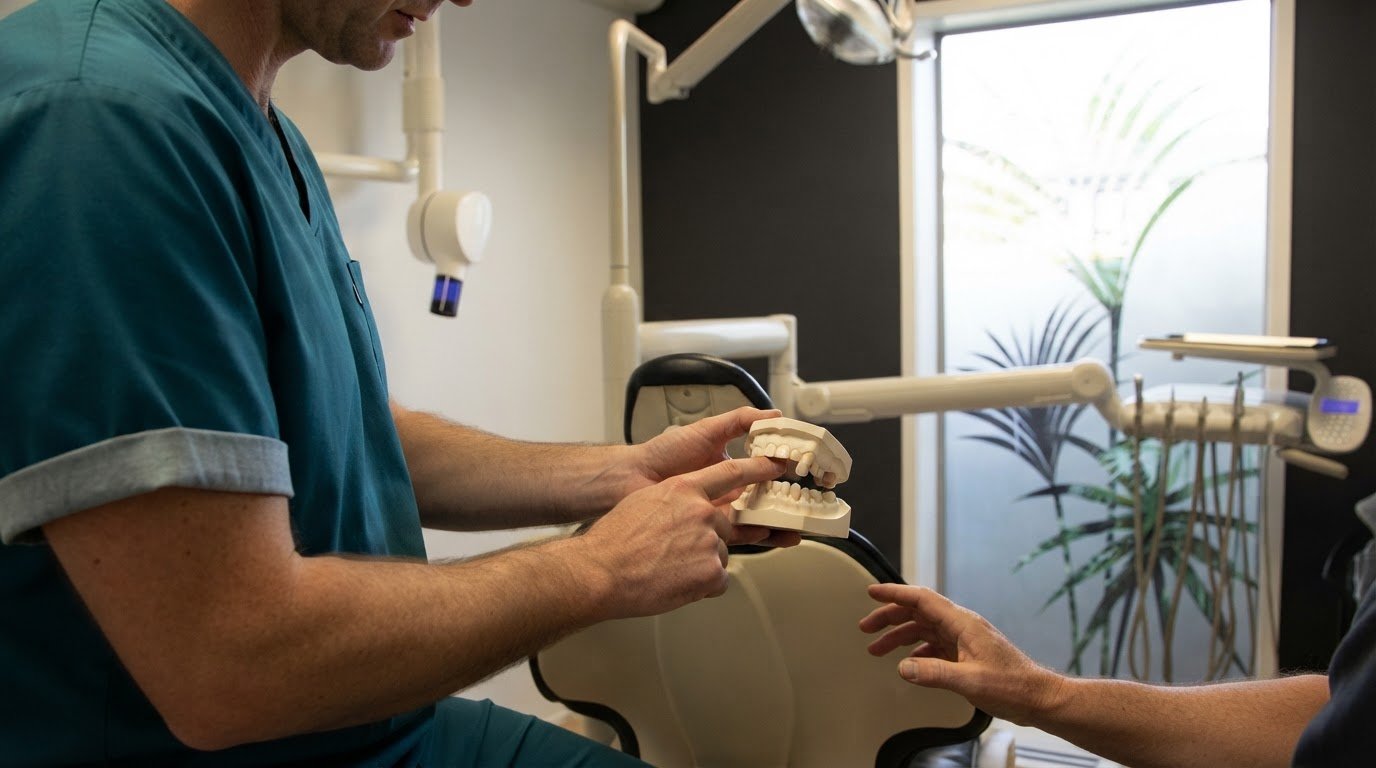
Your dentist considers how the tooth works with the rest of your bite. Clenching, grinding or other relevant factors in your dental history may also shape the assessment, but none should determine the material choice on its own. Ask how these details relate to the options that are clinically suitable. The dental crown procedure and care guide from MedlinePlus provides broader background, while your dentist can explain how your own findings apply.
Rather than asking which option is ranked highest, ask what makes a particular material suitable for your tooth and what trade-offs to consider. That’s a more grounded way to explore the best material for dental crowns NZ patients might hear about online. For a personalised discussion of crown treatment, talk with Dental Plus about crown options.
How can you prepare to choose a crown material with your dentist?
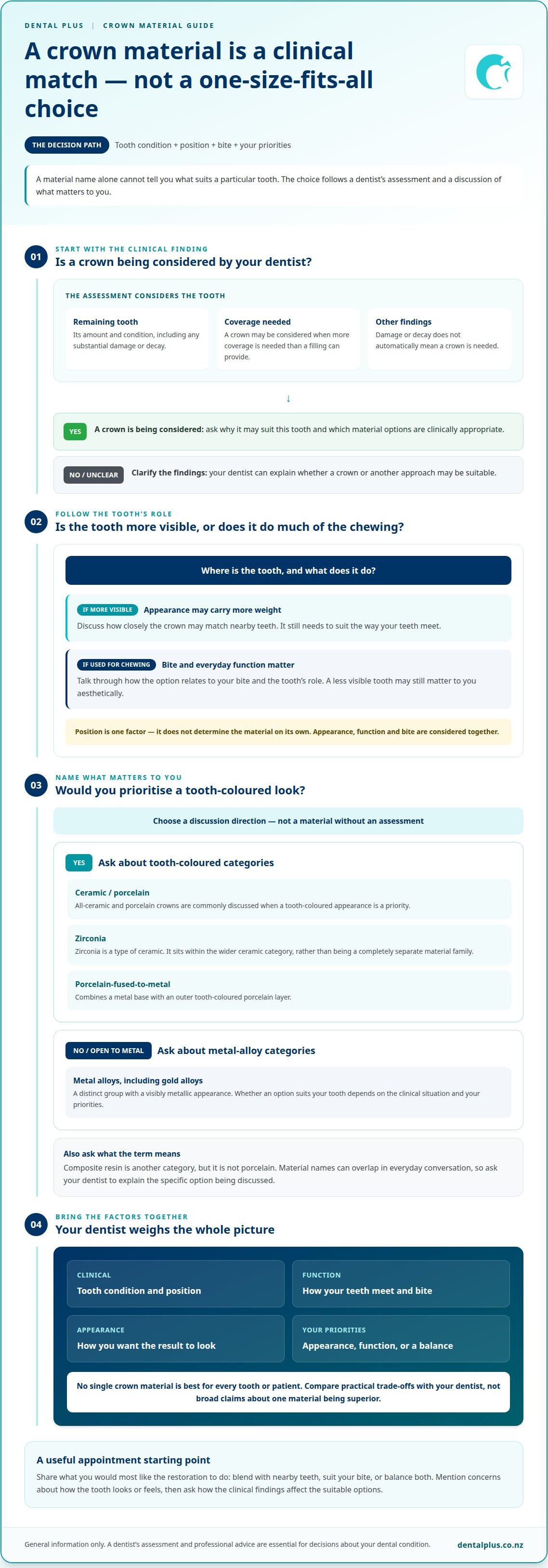
A little preparation can make a crown consultation easier to follow. You don’t need to know technical names in advance. Focus on what matters to you, share relevant information about your dental health, and ask how the recommendation relates to the tooth being treated. This helps turn a material comparison into a clear conversation about your care.
Use this four-step sequence to guide the discussion:
Describe your priorities. Explain whether appearance, function or a balance of both matters most. Mention any concerns about the tooth or treatment.
Review the clinical findings. Ask what the examination shows and how the tooth’s condition, position and role affect the options.
Compare suitable choices. Invite the dentist to explain the relevant differences in plain language, including the trade-offs for your tooth.
Discuss the plan. Make sure you understand the proposed treatment, its cost estimate and what happens next before deciding how to proceed.
What should you discuss at a crown consultation?
Ask which findings make the proposed material suitable and how the tooth’s position and bite have influenced the recommendation. Share what you’d like the crown to look like, along with any concerns about treatment. If a term feels unfamiliar, ask your dentist to explain the options and trade-offs in everyday language. You can also clarify how a crown differs from a veneer using this crowns and veneers guide.
Be open about your dental history, including previous treatment or concerns that may affect the assessment, and provide an accurate medical history. Details that seem unrelated may still help your treating dentist understand your circumstances, so raise any concern you’re unsure about.
What should a personalised treatment plan make clear?
After examining your tooth, your dentist can provide a treatment plan and cost estimate. It’s reasonable to ask how the recommendation addresses your tooth’s needs, what alternatives are suitable and what the next steps involve. Take time to clarify anything you’re unsure about. Understanding the plan helps you make an informed decision.
You must consent before significant dental work begins. Make sure you understand and agree to the proposed care, follow the instructions provided by your dentist, and attend scheduled appointments. A useful discussion isn’t about choosing a material from a ranking. It’s about understanding why an option is being recommended for you, so the question of the best material for dental crowns NZ patients might encounter online becomes a personalised clinical conversation.
For a crown assessment and a treatment plan tailored to your needs, book a crown consultation with Dental Plus.
Choosing a dental crown material in Tauranga: discuss your options at Dental Plus
Choosing a crown material is a personal clinical decision, not a contest with one option that suits everyone. Dental Plus provides restorative dentistry, including crowns, in Mount Maunganui. A dentist can assess your tooth and discuss suitable options as part of a personalised treatment plan. That assessment connects general information about crown materials with the needs of your tooth.
Dental Plus serves Mount Maunganui, Tauranga and the Bay of Plenty. The practice has 30+ years of combined dental experience and has cared for 14 300 smiling clients. These details offer local context, while a recommendation for your crown still depends on your examination and clinical findings. No material or treatment outcome can be assumed before that assessment.
What can you expect from a local crown discussion?
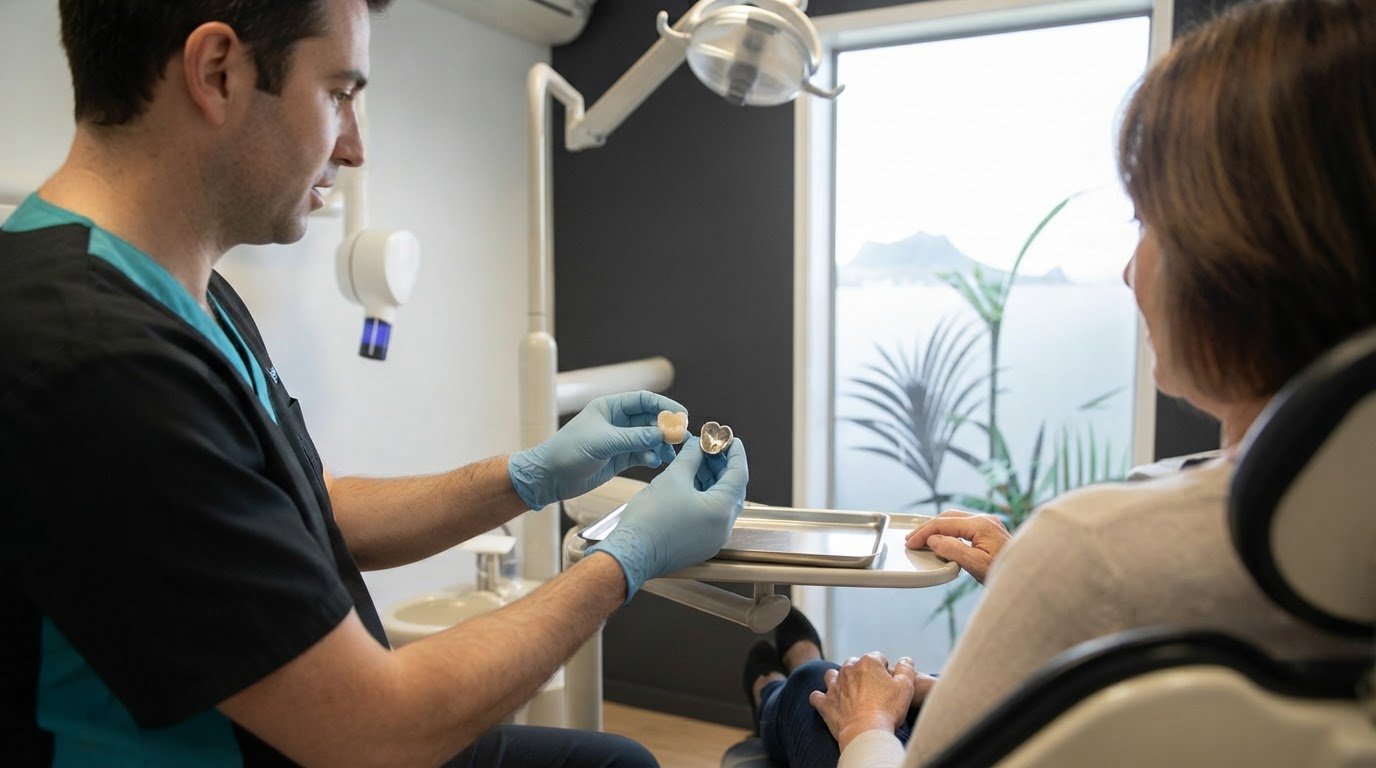
The conversation begins with the tooth. Your dentist can examine its condition, consider the restorative care it needs and explain how its position and function relate to material choices. You can raise appearance preferences or questions about how the crown may fit into your bite. Rather than choosing from a general ranking, you’ll have the opportunity to understand which options may be appropriate for your circumstances and why.
This is also a chance to discuss unfamiliar terminology. If a material name or recommendation isn’t clear, ask for an explanation in plain language. Understanding the reasons behind the proposed approach can make it easier to weigh your priorities and take part in decisions about your care.
What should you know before arranging a visit?
Dental Plus services are by appointment only. Appointments cancelled with less than 24 hours’ notice may incur a cancellation fee; the exact amount isn’t disclosed here. Allow time for the dentist to assess the tooth and discuss the treatment plan, rather than expecting a material choice to be made from general information alone.
You can prepare by noting what you’d like to ask and raising any concerns relevant to the tooth. The aim is a clear, considered discussion, not pressure to select a particular material. Learning about the best material for dental crowns NZ patients might see recommended online is a useful starting point, but professional advice should be based on an assessment of your dental condition.
For an examination-led conversation about your crown options, arrange a dental consultation with Dental Plus.
This article is general information only and doesn’t replace professional dental advice. Always seek advice from a dentist about a dental condition or questions concerning your care.
Take your next step towards an informed crown choice
You don’t need to settle on a material before speaking with a dentist. Bring your questions, explain what matters to you and focus on how the recommendation fits your tooth and bite. That conversation can turn broad online comparisons into a decision grounded in your clinical needs.
The best material for dental crowns NZ patients choose isn’t a universal winner. It’s the option your dentist considers suitable after assessing your tooth and discussing your priorities. If you’re ready to explore crown treatment, arrange a dental consultation with Dental Plus to discuss your individual needs and possible next steps.
Take it one step at a time. With clear information and a personalised discussion, you can feel more confident about making an informed choice.
Frequently Asked Questions
Which crown material looks most like a natural tooth?
Tooth-coloured ceramic materials are often discussed when a natural-looking appearance is a priority, but no material guarantees an exact match. The result also depends on factors such as the surrounding teeth and the crown’s shape and shade. Tell your dentist what you’d like the crown to look like, especially if it will be visible when you smile. They can explain what may be achievable for your tooth.
Are zirconia crowns better than porcelain crowns?
Not necessarily. Zirconia is a type of ceramic, while “porcelain” can be used broadly in conversation, so the terms don’t always describe directly comparable options. The suitable choice depends on the tooth, your bite and your priorities, not a universal ranking. If you’ve seen a claim that one is always better, ask your dentist which specific materials are being compared and how each relates to your clinical findings.
Can a dental crown material cause an allergic reaction?
A reaction to a dental material is possible, so tell your dentist about any known allergies or previous reactions to dental or other materials before treatment planning. Share what caused the reaction and what symptoms you experienced, if you know. Material composition can vary, and your dentist can consider your history when discussing suitable options. Don’t assume a material is appropriate for you based only on a general online description.
Can a crowned tooth still get decay?
Yes. A crown covers the tooth, but the natural tooth and gumline around it still need care, and decay can develop where plaque collects. Brush carefully along the edge of the crown and clean between your teeth as part of your usual routine. If you notice sensitivity, discomfort or a change around the crown, arrange a dental assessment rather than trying to diagnose the cause yourself.
How should I care for a dental crown?
Care for a crown by keeping the tooth and surrounding gumline clean, just as you would with your other teeth. Brush and clean between your teeth regularly, and attend dental check-ups so your dentist can review your oral health. Follow any instructions given for your individual situation. If the crown feels loose, damaged or uncomfortable, contact your dentist for advice instead of attempting to adjust it yourself.
Can a crown be replaced with a different material later?
It may be possible, but changing the material isn’t automatic. A dentist needs to assess the existing crown, the condition of the underlying tooth and the restoration needed before discussing replacement choices. The amount of healthy tooth remaining and the reason for replacing the crown may affect the plan. If you’re considering a change for appearance or comfort, explain what’s prompting it during your assessment.
Does the best crown material depend on whether the tooth is at the front or back?
Yes, tooth position can influence the discussion, but it doesn’t decide the material by itself. A front tooth may be more visible, while a back tooth has a different role in chewing. Your dentist also considers how the teeth meet and any relevant habits or dental history. The best material for dental crowns NZ patients consider is the one assessed as suitable for their particular tooth and circumstances.
Comments