
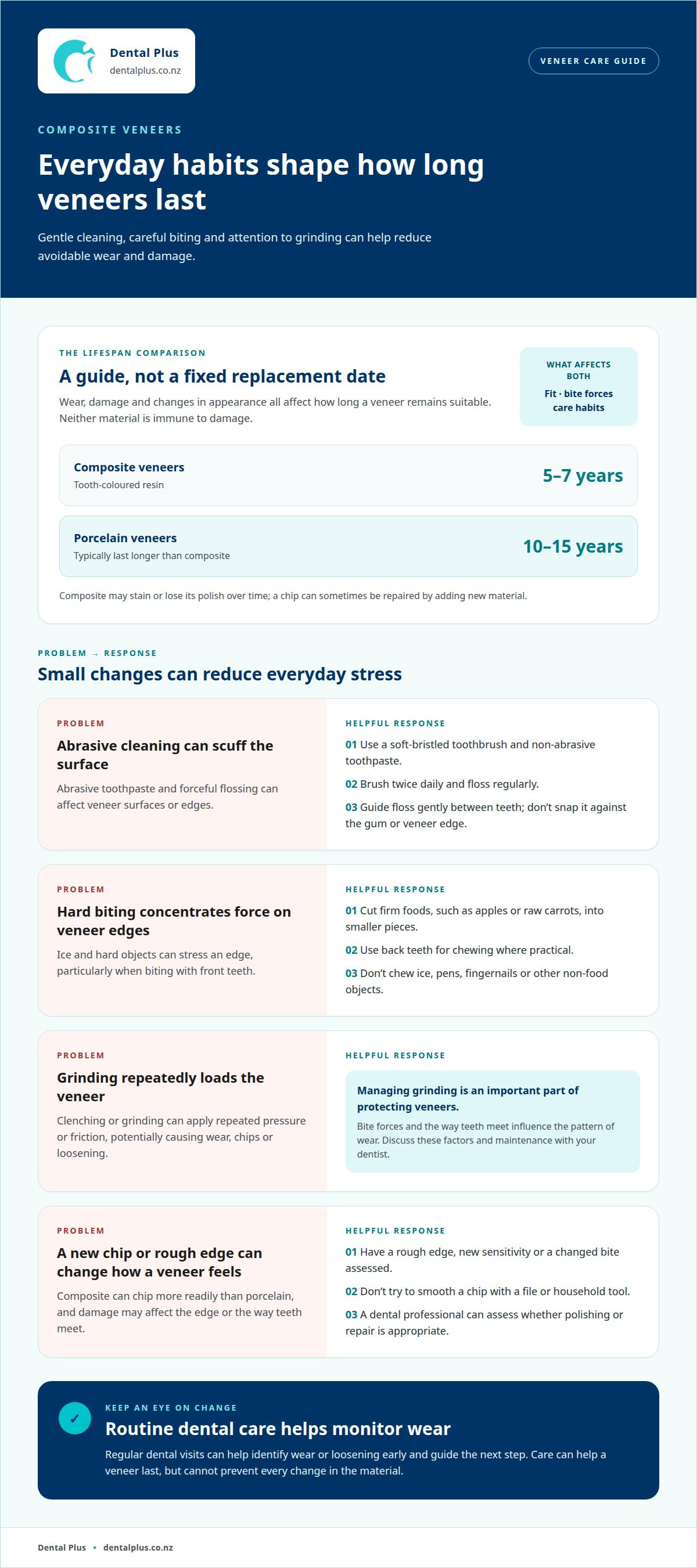
Composite veneer durability: how care and wear affect it

Porcelain may last longer, but everyday care and bite habits also affect how long veneers perform. Composite veneers typically last 5 to 7 years, while porcelain veneers typically last 10 to 15 years. Composite veneers’ durability depends in part on how well they’re cared for and whether they’re exposed to hard foods, teeth grinding or chipping.
It’s natural to want a clear idea of what you’re choosing and how long the result might last. Composite veneers are tooth-coloured resin applied to the front of teeth. Porcelain veneers use a different material and typically last longer. But durability isn’t only about years: habits and the type of wear matter, too.
This article explains what composite veneers are and how brushing, hard foods, teeth grinding and chips can affect their durability compared with porcelain. You’ll also learn when composite may suit your situation, what damage to watch for, and how routine dental care can help monitor wear over time.
Table of Contents
What are composite veneers?
Composite veneers are tooth-coloured resin shaped over the visible surfaces of teeth. The dentist builds and polishes the material to change a tooth’s colour, shape or appearance. Unlike porcelain veneers, composite is applied directly as a mouldable material or prepared indirectly before placement. The method affects how the veneer is made and fitted.
Composite veneers typically last an average of 5 to 7 years. That figure is a guide, not a fixed replacement date: wear, damage and changes in appearance influence how long they remain suitable. Composite may stain or lose its polish over time, while a chip can sometimes be repaired by adding new material. Regular dental visits can help identify wear or loosening early.
Material composition helps explain the difference between resin and porcelain. In modern composite resin, inorganic fillers typically make up approximately 70-80% of the material by weight. These fillers contribute to the material’s performance, while the resin binds the mixture. Nano-filled composites contain particles measuring between 5 and 100 nanometres, allowing fine surface detail during shaping and polishing.
Porcelain veneers typically last 10 to 15 years, longer than the average lifespan for composite. Their different material properties affect how each responds to everyday use, but neither material is immune to damage. A veneer’s fit, the forces placed on it and the wearer’s care habits all influence its service life. For example, repeated pressure on a front tooth can affect either type.
What affects the durability of composite veneers? Daily brushing, hard foods, teeth grinding, oral habits and the veneer’s fit all play a part. Repeated force or abrasive cleaning can make a veneer wear or chip sooner. Care can help it last, but cannot prevent every change in the material.
What is the procedure for getting composite veneers, and how many appointments does it take? Treatment includes assessment and planning, followed by tooth preparation, composite placement, shaping and polishing. The number of appointments depends on how many teeth are being treated and the planned work. Your dentist can explain the sequence before treatment begins.
What should I look for when choosing a New Zealand dentist for composite veneers? Choose a dentist who explains the material and treatment stages, and discusses how bite forces and maintenance may affect your result. Ask how the proposed shape and colour will suit your teeth, and how chips or wear could be managed over time.
Brushing and avoiding hard foods
Brushing helps clear plaque and food debris from the gumline and veneer edges. Use a soft-bristled toothbrush and non-abrasive toothpaste to clean without unnecessarily scuffing the veneer surface. People with veneers are advised to use non-abrasive toothpaste because abrasive products can damage that surface. A whitening toothpaste may feel like a sensible way to brighten teeth, but check its abrasiveness before using it on veneers.
Make brushing part of your regular morning and evening routine. Brush twice daily and floss regularly to clean between teeth, where a toothbrush may not reach. Guide floss gently between each pair of teeth instead of snapping it against the gum or veneer edge. A consistent routine helps keep margins clean, where plaque can collect along the boundary between tooth and veneer.
Food choices matter because front teeth can take direct pressure when biting. Ice is especially hard, and chewing it can stress a veneer’s edge. Avoid biting hard objects, including pens or fingernails, with your front teeth. These habits concentrate force on a small area rather than spreading pressure across the teeth.
Cut firm foods, such as apples or raw carrots, into smaller pieces.
Use back teeth for chewing where practical, rather than biting hard food with veneered front teeth.
Don’t chew ice, pens, fingernails or other non-food objects.
Keep brushing with non-abrasive toothpaste, and floss regularly around each veneer.
Small changes can make meals easier on veneer edges. Slice a crunchy apple and chew the pieces with your back teeth to reduce direct biting force on the front surfaces. The same approach works for crusty bread or firm vegetables. You don’t need to avoid all hard foods; changing how you bite and chew is the useful distinction.
Pay attention to changes after eating or cleaning. A rough edge, new sensitivity or a veneer that feels different against the opposing teeth is worth having assessed. Don’t try to smooth a chip with a file or household tool, as this can alter the surface and shape. A dental professional can examine the edge and decide whether polishing or repair is appropriate.
Daily habits work together: gentle cleaning helps protect the surface, while careful biting reduces sudden pressure. If brushing causes discomfort around a veneer or floss catches at its edge, arrange a dental assessment rather than trying to change the veneer yourself. Addressing an issue early can help prevent ongoing irritation or further damage.
Bruxism and bite forces
Bruxism means clenching or grinding your teeth, often during sleep. These movements repeatedly load veneers rather than stressing them during a single bite. A front veneer can experience pressure when the upper and lower teeth press together, while side-to-side grinding can create friction across its surface. The location and direction of these forces help explain why your bite matters.
Composite veneers face the same mechanical challenge as natural teeth: repeated pressure can stress the material and its bond. Strong, ongoing forces can cause a veneer to wear, chip or loosen. For example, grinding your front teeth may repeatedly load the edges of front veneers. The extent and pattern of wear depend on where the teeth meet and how they move.
A rough veneer edge, new chip or change in how your teeth meet deserves attention. You may also notice jaw tightness after sleep, or a partner may hear you grinding. These details don’t establish the cause, but they help describe the pattern. Note when the change began and which teeth feel affected, as this information can guide a dental assessment.
For people with bruxism, a nightguard is advised to protect porcelain veneers from excessive bite forces during sleep. It creates a protective layer between the teeth and reduces direct contact with the porcelain. Composite veneers also need consideration when grinding is present, since repeated pressure can affect their edges and attachment. A dentist can assess your bite and veneer condition together.
Practical steps can help you monitor changes between dental visits:
Notice whether grinding occurs during sleep or clenching happens while concentrating.
Pay attention to a new chip, rough edge or change in tooth contact.
Describe any jaw tightness and when it tends to occur.
Avoid testing a veneer by biting hard objects or deliberately clenching.
A bite assessment looks at how your upper and lower teeth meet, including which teeth make contact first. For example, a front tooth that takes more pressure than its neighbours may face a different load. The dentist can also check veneer edges for wear or damage. These findings help shape a plan to protect your teeth and restorations.
Bruxism doesn’t automatically rule out veneers, but unmanaged grinding can put added stress on them. The material, veneer position and bite pattern all matter. If a veneer feels newly uneven or becomes damaged, arrange an assessment rather than adjusting it yourself. This lets the dentist consider what caused the change alongside the restoration.
Chipping and fracture resistance
A chip can change a veneer’s edge, surface or appearance. Composite is weaker than porcelain and can chip with use. A small chip on a front tooth may feel rough against your tongue; a larger break can change the tooth’s outline or expose the underlying tooth. The damage depends on where the force lands and how the veneer meets neighbouring teeth.
Direct composite veneers are shaped on the tooth, while indirect composite veneers are prepared outside the mouth. Indirect composite veneers can withstand more abrasion and resist fractures better than direct composite veneers. This difference relates to the material and fabrication method, but indirect veneers aren’t immune to damage. A hard impact or repeated pressure can still affect either type.
Everyday actions can concentrate force on veneer edges. Biting a hard lolly with a front tooth, opening packaging with your teeth or clenching during sleep can stress a small area. A sudden impact, such as a knock to the mouth, can also cause a chip. The same event may affect the natural tooth as well as the composite, so an examination should consider both.
Look for a visible notch, rough patch, sudden change in shape or edge that catches floss. Avoid repeatedly running your tongue over a damaged area or testing it by biting something hard. These checks can’t show the full extent of a fracture. A dentist can inspect the veneer’s surface, edges and bond to determine what has changed.
A surface chip may affect smoothness or appearance.
A fractured edge can alter how the front teeth meet.
A loose veneer may move or feel different during eating.
Damage accompanied by tooth pain needs assessment of the tooth beneath.
Composite has a practical repair advantage: new composite material can be added to repair or replace it. The dentist first assesses the damage and veneer condition, then considers suitable treatment. A small chip may need a different approach from a fractured or loosened veneer. Being repairable doesn’t mean every damaged veneer can be restored in the same way.
After a chip, avoid biting hard foods with that tooth until it’s assessed. Don’t file or glue the veneer yourself, as this can affect its shape or surface. A newly rough front edge is worth having examined, even if the tooth feels comfortable. Prompt assessment helps identify whether the change involves only the composite or also the underlying tooth.
Composite and porcelain veneer durability
Compare more than expected lifespan when weighing composite against porcelain. Composite veneers can be repaired by adding material, while porcelain veneers have strong long-term survival figures. Up to 95% of porcelain veneers remain functional after 10 years, and approximately 85% survive at 15 years. These figures describe groups, not the outcome for every individual veneer. The durability of composite veneers also depends on how they’re used and maintained.
“Functional” and “surviving” don’t necessarily mean a veneer looks unchanged. It can remain in place while its surface or appearance changes. For example, a visible chip may affect appearance without making the restoration unusable. The comparison depends on what matters most to you: how long the veneer stays in place, how it looks, or how readily damage can be addressed.
Composite offers a repair option beyond simply replacing a restoration. If the damage is suitable, new composite can be added to the existing material to help restore a chipped edge or altered contour. The dentist needs to assess the damage’s size and position, the bond and the underlying tooth. A loose or extensively damaged veneer may need a different plan.
Porcelain’s survival figures make it a strong option to discuss for longer-term function. However, those figures don’t remove the need to consider bite forces, care habits and veneer location. A front tooth exposed to grinding faces a different pattern of stress from one with little direct contact. When comparing composite veneers’ durability with porcelain’s, weigh the material alongside your own habits and priorities.
Consider these trade-offs as part of the comparison:
Expected longevity: porcelain survival figures extend to 15 years, while composite has a shorter typical lifespan.
Repair approach: composite can be repaired by adding material, depending on the damage.
Wear and appearance: consider how surface changes or a chip would affect your priorities.
Bite pattern: grinding or repeated pressure can influence the demands placed on either material.
Ask how a proposed veneer will be assessed over time, including checks for wear, changes in appearance and loosening. A useful discussion compares likely maintenance and repair needs for your teeth, rather than treating survival percentages as a personal forecast. Your preferred balance of longevity, appearance and repairability can help guide that conversation.
If you’re weighing composite against porcelain, discuss veneer options and how each material may suit your teeth and bite.
Dental Plus: Professional Dental Hygiene
Dental Plus offers Professional Dental Hygiene and Routine Check Ups to support your ongoing oral care in Tauranga. If you have composite veneers, a check-up is a practical time to discuss changes in their feel or appearance and have them assessed. Regular dental care can help identify wear or loosening, while hygiene care supports your teeth and gums.
If you’re considering veneers, Digital Smile Design (DSD) can help you explore your smile’s appearance as part of planning. The next step depends on whether you’re maintaining existing veneers, noticing a change or considering treatment. Contact Dental Plus in Tauranga to discuss your dental care.
Choose a veneer plan that suits your priorities
Consider composite veneers’ durability alongside your priorities for appearance, maintenance and future care. In your next dental conversation, explain what matters most, including any changes you’ve noticed or concerns about your bite. This gives the discussion a practical focus: finding an approach that fits your teeth and expectations.
Dental Plus offers Digital X-rays as part of its dental care in Tauranga. An assessment can help frame a conversation about your teeth and possible veneer options. Your oral health and circumstances shape which approach is appropriate, so treat the material choice as a decision to discuss rather than a fixed answer.
If you’re ready to explore your options, contact Dental Plus about veneers. A considered next step can help you feel more informed and comfortable about the smile you want.
Frequently Asked Questions
How long do composite veneers last?
Composite veneers typically last an average of 5 to 7 years. Their condition matters as much as elapsed time: a veneer may need attention earlier if it chips, loosens or changes noticeably. At a dental review, mention any roughness, visible wear or change in how your teeth meet. This gives the dentist specific details to assess, rather than relying on age alone to decide whether maintenance is needed.
How do composite veneers compare with porcelain veneers for durability?
Porcelain veneers typically last 10 to 15 years, compared with an average of 5 to 7 years for composite. The materials also differ in how damage can be managed: composite can sometimes be repaired by adding material. Porcelain has reported long-term survival figures, but those describe groups rather than predicting one person’s outcome. Consider expected lifespan alongside repair options, appearance and the forces your teeth experience.
How often do composite veneers need repair or replacement?
There’s no set repair or replacement interval for every composite veneer. A dentist assesses its condition, including chips, wear, looseness and changes in appearance. A small surface defect may call for a different response from a veneer that has detached or fractured. Keep routine dental reviews, and arrange an assessment if a veneer suddenly feels different or catches against another tooth.
What maintenance helps composite veneers last longer?
Use a soft-bristled toothbrush and non-abrasive toothpaste, and floss gently around veneer margins. These habits clean areas where plaque can gather without abrading the surface. Keep routine dental appointments so changes can be examined. If floss repeatedly catches at one edge or brushing reveals a rough spot, mention that specific area at your next assessment.
What foods, drinks, or habits can damage composite veneers?
Chewing ice, biting hard foods with front teeth, nail-biting and using your teeth as tools can put damaging pressure on veneers. Coffee and tea may stain composite surfaces. Cut firm foods into smaller pieces and avoid chewing non-food objects such as pens. These adjustments reduce avoidable stress and staining, but can’t reverse a chip or restore a damaged veneer’s original surface.
What are the risks and common problems with composite veneers?
Common problems include chipping, surface wear, staining and loosening. Composite is weaker than porcelain, so pressure or an impact can cause a chip. A change in shape can affect appearance or how your teeth meet. If you notice a new rough edge, visible damage or movement, avoid testing the veneer by biting hard food. A dental assessment can establish whether the veneer or underlying tooth needs attention.
Are composite veneers suitable for everyone, including people who grind their teeth?
Composite veneers aren’t automatically suitable for every person or bite. Grinding can expose them to repeated pressure, so the dentist considers where your teeth contact, the extent of wear and the veneer’s position. Mention if you wake with jaw tightness or have noticed clenching. This context helps guide a discussion about material choice and managing bite forces before treatment proceeds.
Comments