
Dental Crowns: When You Need One and How to Care for Them

Updated: Oct 26
What if a tooth crown is recommended not for appearance alone, but to help a weakened tooth cope with everyday biting and chewing? If your dentist has suggested one, it’s natural to wonder why a crown may suit your tooth better than a filling, whether treatment will be uncomfortable, and how the finished result will look.
The right choice depends on the tooth’s condition, its role in your bite and your priorities. A crown can cover and support a tooth that needs more protection, but it isn’t automatically the best option for every problem. Understanding the reason for the recommendation can help you discuss your care with confidence.
This guide explains what a tooth crown does, when a dentist may recommend one and what to expect before, during and after treatment. You’ll also find practical points to consider when caring for a crown and preparing questions for an assessment. At Dental Plus in Mount Maunganui, Tauranga, crowns and veneers are part of a considered approach to tooth health, function and appearance.
Table of Contents
What is a tooth crown, and when might a dentist recommend one?
A damaged tooth can prompt several questions at once: will it still be comfortable to bite with, can it be repaired, and will the repair look natural? A crown is a restoration shaped to fit over a tooth, covering its visible portion above the gumline. It acts as an outer covering that can restore the tooth’s shape and help it manage everyday use.
A dentist may consider a crown when a tooth has extensive damage or too little healthy structure to be reliably restored with a filling. This can happen after substantial decay, a fracture or previous treatment that has left the tooth weakened. The aim is to address the individual tooth’s needs, rather than apply the same solution to every damaged tooth. A dental crown is one type of restoration, and its suitability depends on a clinical assessment.
What problems can a tooth crown help address?
A crown can cover a compromised tooth, helping restore its form and support its function. For example, a tooth with extensive damage may need more coverage than a filling can provide. A tooth weakened by previous treatment may also need added protection. These are possibilities, not automatic rules. The size and position of a crack, the amount of sound tooth remaining and the tooth’s role in biting all affect the decision.
Substantial decay: If decay has removed a large amount of tooth structure, a dentist will assess whether a filling can restore it adequately or whether broader coverage is needed.
Fracture or breakage: The location and extent of damage matter. Not every crack calls for a crown; the right approach depends on the crack and the tooth’s condition.
Weakness after treatment: Previous treatment can leave a tooth with less supporting structure. A dentist considers how much remains and how the tooth functions before recommending a restoration.
An examination helps distinguish between these situations. The dentist can assess the tooth, explain relevant findings and discuss why a crown, another restoration or a different plan may be more suitable.
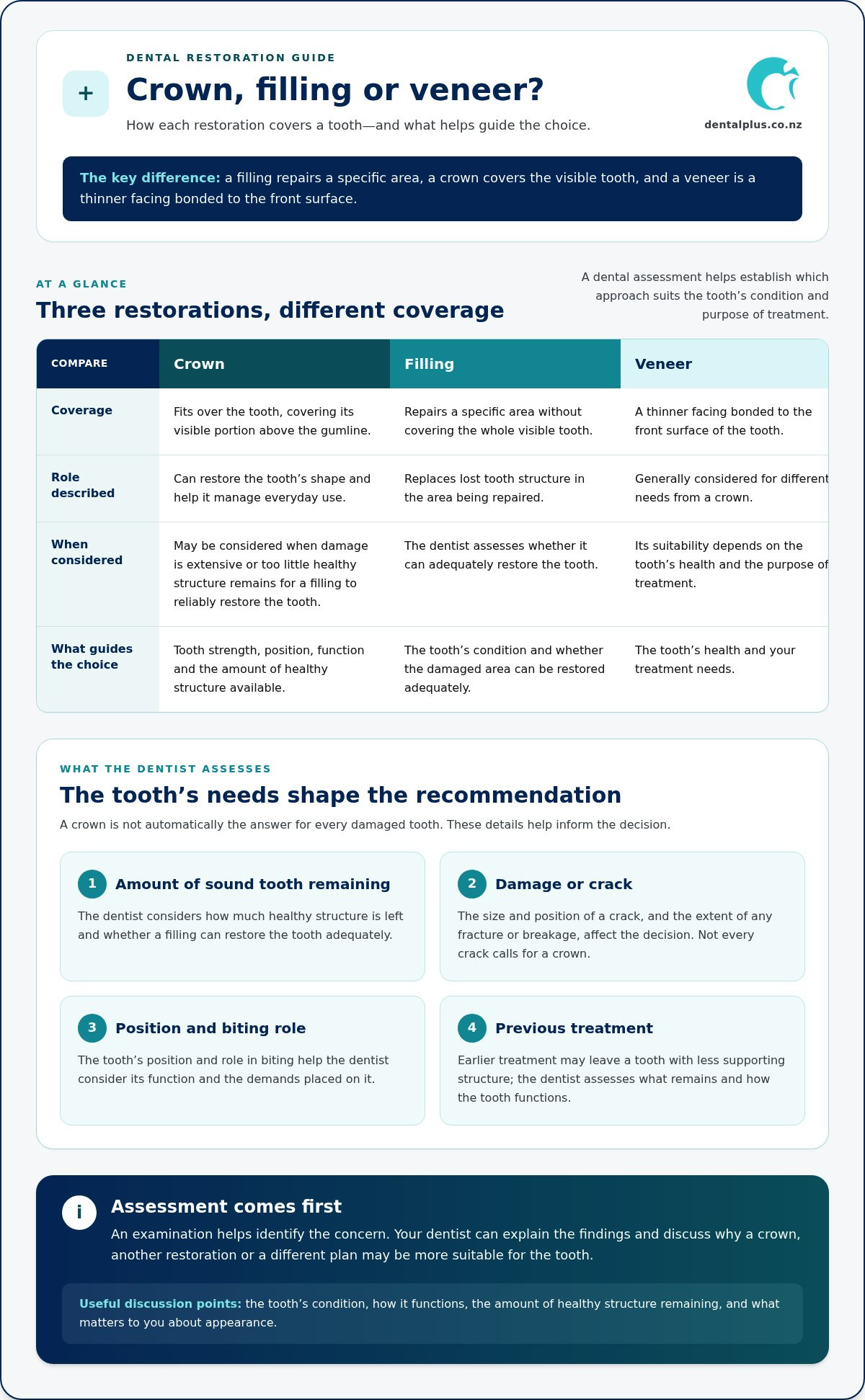
How is a crown different from a filling or veneer?
A filling repairs a specific area of a tooth, replacing lost structure without covering the whole visible tooth. A crown fits over the tooth to restore its outer form. A veneer is a thinner facing bonded to the front surface, generally considered for different needs from a crown. The suitable option depends on the tooth’s health and the purpose of treatment.
Appearance is only one part of the decision. Your dentist will consider the tooth’s strength, position, function and the amount of healthy structure available, then explain the reasoning in plain language. For a broader overview of how these restorations differ, explore our crowns and veneers guide.
How does getting a tooth crown work, from assessment to fitting?
Knowing what each stage is for can make treatment feel more manageable. The process is planned around the tooth’s condition, the restoration needed and your concerns, rather than a fixed sequence for everyone. Your dentist will explain the proposed steps and give you time to discuss what to expect.
What happens at the assessment and planning stage?
The dentist examines the tooth and surrounding area, and may use imaging if it’s clinically appropriate to understand what’s happening beneath the surface. Describe any discomfort or changes in how you bite, and explain what matters to you about appearance. The findings help shape a plan that takes the tooth’s health and function into account.
The stages often follow this order, although details can vary:
Assessment and discussion: Your dentist examines the tooth, considers relevant imaging and explains whether a crown is suitable. You can discuss the options and ask questions before agreeing on a plan.
Preparing the tooth: If a crown is planned, the dentist reshapes the tooth as needed so the restoration can fit over it. The amount of preparation depends on the tooth and treatment plan.
Planning the restoration: Information about the prepared tooth is used to make a crown designed to fit its shape. Your dentist will explain how this stage is managed for your treatment.
Fitting and checking: The crown is positioned and checked for fit and bite. If anything needs adjusting, the dentist can assess this before completing the fitting.
What happens when the crown is prepared and fitted?
Preparation creates room for the crown to sit over the tooth without unnecessarily changing how your teeth meet. Depending on the plan, a temporary restoration may be placed while the final crown is being made, though it isn’t needed in every case. At the final fitting, the dentist checks how the crown sits and feels, and makes adjustments if appropriate.
In short, a crown journey moves from examining the tooth, to planning and preparation, then fitting and checking the restoration. The National Library of Medicine’s overview of getting a dental crown also describes the general preparation and fitting process. Your own treatment may differ according to your clinical needs.
If you’re uneasy about dental treatment, let your dentist know what concerns you. Dental Plus offers sedation dentistry, and you can discuss comfort options as part of planning your care.
For a tooth crown, the assessment is a chance to understand the reasoning behind the recommendation, not simply move straight to treatment. If you’re considering a crown in Tauranga, you can arrange a dental assessment with Dental Plus in Mount Maunganui and discuss a plan tailored to your tooth.
Which tooth crown option is right for your needs?
Choosing a crown isn’t simply a matter of picking the material that looks best. The tooth’s position, the amount of healthy structure remaining, the forces it needs to handle and your preferences all inform the discussion. A dentist can explain the trade-offs in light of your examination, rather than relying on a general rule for every smile.
What should you consider when discussing crown materials?
Appearance may matter more for a tooth that shows when you smile, while a back tooth may face greater chewing demands. These are useful starting points, not a formula for choosing a material: your bite, the condition of the tooth and the planned restoration also matter. Common material categories have different practical and appearance considerations.
This comparison outlines broad differences, not a recommendation. Your dentist can explain which materials suit the tooth being treated and why, including how appearance, location and function shape the plan. For a closer look at two ceramic categories, our zirconia and porcelain crown guide explores further considerations. For wider oral health information, the National Institute of Dental and Craniofacial Research is a government resource.
When might a crown be weighed against another restoration?
The amount and condition of the remaining tooth structure are central to treatment planning. If the damaged area is limited and enough healthy tooth remains, a filling or another more conservative restoration may be considered. If a larger area needs restoring, a crown may be discussed as one way to cover the tooth. The recommendation depends on clinical findings, not just how the tooth looks.
A crown isn’t automatically preferable. Your dentist can explain the purpose of each suitable option, what it involves and how it relates to your priorities. Ask what the assessment shows, how much sound tooth remains and why the proposed restoration is appropriate. This helps you weigh function and appearance with a clear understanding of the reasoning behind the plan.
Any comparison should be specific to your tooth. General information can help you prepare questions, but it can’t account for your bite or the extent of damage. A tooth crown is one possible restoration; the right decision follows an individual clinical assessment and a discussion of the treatment plan.
What should you expect after a tooth crown is fitted?
After a crown is fitted, the tooth and surrounding gum may feel a little different as you get used to the restoration. Some people notice temporary sensitivity or tenderness, while others have few changes. Your experience depends on the tooth and treatment, so follow your dentist’s specific guidance rather than relying on a fixed recovery timetable.
A crown covers the visible part of a tooth, but the natural tooth and the gum around it still need everyday care. Brush gently and thoroughly, clean between your teeth and keep up with routine dental check-ups to care for your mouth as a whole. Your dentist may give extra instructions based on your treatment, so make sure you understand what to do at home and whom to contact if you have concerns.
How can you care for your tooth and crown?
Keep to your usual oral hygiene routine unless your dentist advises otherwise. Take care around the restored tooth and follow any individual instructions about cleaning or eating after treatment. If you’re unsure how to brush or floss around the crown, ask your dentist to show you. Aftercare can differ because the treatment and condition of the tooth vary.
Aftercare reminder: Follow your treating dentist’s instructions, and seek their advice if something doesn’t feel right.
When should you contact your dentist after treatment?
Get in touch with your dentist if the crown feels loose, appears damaged or remains uncomfortable. Seek advice if your bite feels noticeably different or you have a concern that isn’t settling. These signs don’t establish what the problem is, but a dental professional can assess the tooth and advise you on the next step. Avoid trying to adjust or reattach the crown yourself.
Loose or damaged crown: Contact your dentist for guidance rather than waiting to see if it settles.
Ongoing discomfort: Explain what you’re feeling and whether it is changing.
A bite that feels different: Mention this, as your dentist can check how the restoration meets the opposing teeth.
Other worrying changes: Seek professional advice rather than trying to diagnose the cause yourself.
It can help to note when you first noticed the change and what seems to make it better or worse. That gives your dentist useful context, but don’t delay getting advice if symptoms are concerning. Care instructions are specific to your treatment, and professional assessment is the best way to address ongoing problems.
If you have questions about caring for a crown or notice a change after treatment, arrange a dental assessment with Dental Plus in Mount Maunganui, Tauranga. The team can assess your concern and discuss appropriate care for your tooth.
Considering a tooth crown in Tauranga? Plan your next step with Dental Plus
If you’re weighing up a tooth crown, start by understanding what’s causing the concern, then discuss suitable options with a dentist. A consultation is a chance to describe what you’ve noticed and hear how the tooth’s health, function and appearance affect the treatment plan. You don’t need to arrive knowing which restoration you need; the assessment helps guide the conversation.
What can you bring to a crown consultation?
A few notes can make it easier to explain what’s been happening, especially if the concern comes and goes. Think about what you’ve noticed and what you’d like the dentist to understand. You can also bring details of relevant dental history or previous treatment, if you have them.
Symptoms: Note any sensitivity, discomfort or changes when biting, including when you first noticed them.
Appearance concerns: Share what you’d like to improve or preserve about the tooth’s appearance.
Daily function: Mention whether eating or biting feels different, and which activities are affected.
Dental history: Include previous treatment on the tooth and any information that may help explain its condition.
Bring your questions, too. You might ask what the assessment shows, which options could be suitable and what each option is intended to address. The examination and discussion inform a recommendation; they don’t guarantee that a crown will be the right treatment.
How can Dental Plus help you explore treatment?
Dental Plus is based in Mount Maunganui, Tauranga, and provides crowns and veneers as part of its restorative and cosmetic dental care. The team considers the tooth’s health, how it functions and your personal goals, helping you understand the proposed plan and decide on your next step.
If treatment is recommended, take time to understand what it involves and how it relates to your concerns. Ask the team to explain the reasoning in plain language and discuss questions about comfort or appearance. Dental Plus also offers Qcard and Afterpay as financing options, which may help you consider how to manage treatment costs.
A clear path forward starts with an assessment, a discussion of suitable options and a plan that reflects the tooth and your priorities. If you’re in Tauranga and would like to talk through a concern about a crown, arrange an assessment with the Dental Plus team.
Take the next step towards a considered treatment plan
A recommendation for a tooth crown should make sense for your tooth and your priorities. Use your appointment to talk openly about what you’re hoping to achieve, any concerns about treatment and the questions you still have. Understanding the reasoning behind a plan can help you make a decision with greater confidence, even if you need time to consider your options.
At Dental Plus, crown and veneer care is part of a personalised approach to restorative and cosmetic dentistry in Mount Maunganui, Tauranga. If dental treatment makes you uneasy, sedation dentistry is available to discuss as part of your care. Qcard and Afterpay are also available as financing options, so you can talk through payment arrangements alongside the treatment plan.
You don’t need to decide on a restoration before an assessment. Start with a conversation about the tooth, your goals and what matters most to you. Arrange a crown assessment with Dental Plus in Tauranga to explore a plan suited to your needs.
Frequently Asked Questions
Does getting a tooth crown hurt?
A crown procedure is planned around the tooth and your comfort, but people’s experiences differ. If you feel anxious or have had difficult dental treatment before, tell your dentist before the appointment so you can discuss what may help. Dental Plus offers sedation dentistry. If you have severe or ongoing discomfort after treatment, contact your dentist for an individual assessment rather than trying to diagnose the cause yourself.
How long does a tooth crown last?
There’s no single lifespan that applies to every crown. Its longevity can depend on the tooth’s condition, your bite, oral hygiene and how consistently you care for your teeth. Habits and changes in the surrounding tooth or gums may also be relevant. Keep up with regular dental reviews so your dentist can check the crown and nearby structures, and raise any change you notice between visits.
Can a tooth crown be replaced?
Will I need a root canal before getting a tooth crown?
No, a crown doesn’t automatically mean you need root canal treatment. Whether root canal treatment is appropriate depends on the condition of the tooth and the dentist’s clinical findings. Ask your dentist to explain what they’ve found, why they’re recommending a particular treatment and what options may be suitable. This helps you understand how the proposed care relates to your tooth, rather than assuming every crown follows the same pathway.
Can a tooth crown look like a natural tooth?
A crown can be planned with its appearance in mind, including how it relates to nearby teeth, but an exact match can’t be promised. The result depends on the clinical situation, material and treatment plan. Before deciding, explain what you’d like the finished tooth to look like and discuss how those preferences can be balanced with the tooth’s health and function. Your dentist can talk through realistic considerations for your case.
Can I eat normally straight after getting a tooth crown?
Follow the instructions from your treating dentist, as eating guidance can differ depending on the treatment stage and whether you have a temporary crown. If you’re unsure what’s suitable, ask the practice for advice tailored to your situation rather than relying on a general rule. If biting feels uncomfortable or the crown seems loose, contact your dentist for guidance. Don’t try to adjust the crown yourself.
Are dental crowns covered by ACC or insurance in New Zealand?
Coverage isn’t automatic, and the answer depends on your circumstances, the treatment involved and the relevant policy or programme rules. Check your insurance policy or ask the organisation managing your ACC matter about your specific situation before assuming a crown is covered. Your dentist can explain the proposed treatment, which may help you when discussing it with them. Eligibility and cover should be confirmed directly with the relevant organisation.
Comments