
Fixing Gapped Teeth With Invisalign and What Results to Expect

A front-tooth gap doesn’t automatically call for veneers or bonding. Invisalign can typically close dental gaps up to 6 mm without additional treatment, and fixing gapped teeth with Invisalign may suit you if the gap and your overall bite can be treated with clear aligners. The right approach depends on what caused the spacing and how your teeth fit together.
If you’re considering fixing gapped teeth with Invisalign, it’s natural to want a clear picture of what treatment involves and whether the result will last. This guide explains what can cause gaps, how Invisalign moves teeth, what may affect treatment time, and why retainers matter after treatment.
You’ll also see how Invisalign compares with bonding, veneers and traditional braces, so you can understand the differences and the factors a dentist considers when planning care. This can help you feel prepared to discuss options for your smile with a dentist in Tauranga.
Table of Contents
What Causes Gaps Between Teeth?
A gap can develop for several reasons, and its cause affects treatment planning. When a tooth is missing, neighbouring teeth may shift towards the space, changing the gaps and the way the bite fits together. Some people naturally have teeth that are small in relation to their jawbone, leaving visible spaces even when their teeth are healthy. These differences help explain why a similar-looking gap can call for a different approach.
Habits during childhood can also influence tooth position. Thumb sucking or tongue thrusting may push teeth out of alignment over time. Advanced gum disease is another possible cause: damage to the supporting bone can loosen teeth, allowing them to move and create spaces. A new or widening gap deserves a dental assessment, rather than being treated as an appearance issue alone. Identifying the cause helps guide decisions about tooth movement.
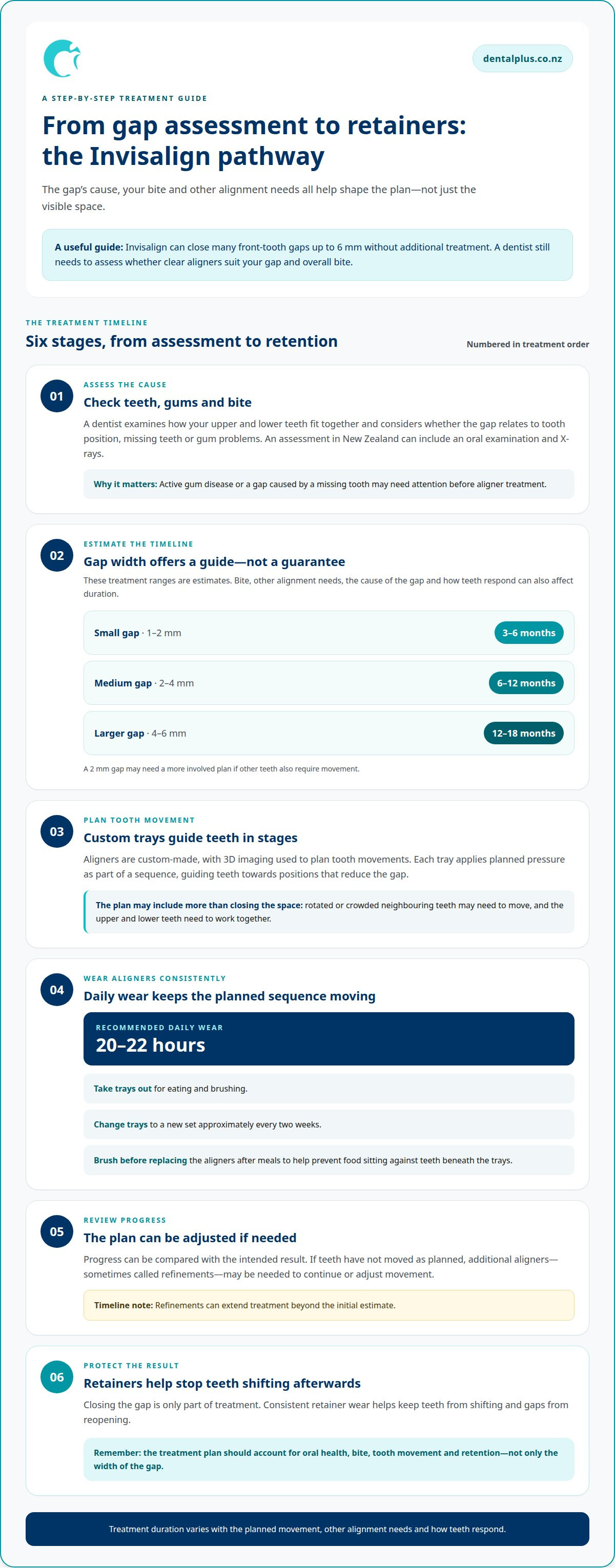
Gap width helps estimate treatment duration, but it doesn’t tell the whole story. A dentist also considers whether teeth have rotated, whether several spaces need closing, and how the upper and lower teeth meet. A gap measuring 2 mm may need a more involved plan than a similar-sized space if other teeth also require movement. For people considering fixing gapped teeth with Invisalign, this assessment helps explain how the treatment plan accounts for more than the visible gap.
As a guide, gaps measuring 1-2 mm may take 3-6 months of Invisalign treatment. Medium gaps measuring 2-4 mm may take 6-12 months, while larger gaps measuring 4-6 mm may take 12-18 months. These ranges reflect different amounts of planned movement. Other alignment needs, the gap’s cause and how teeth respond can also affect the overall timeline.
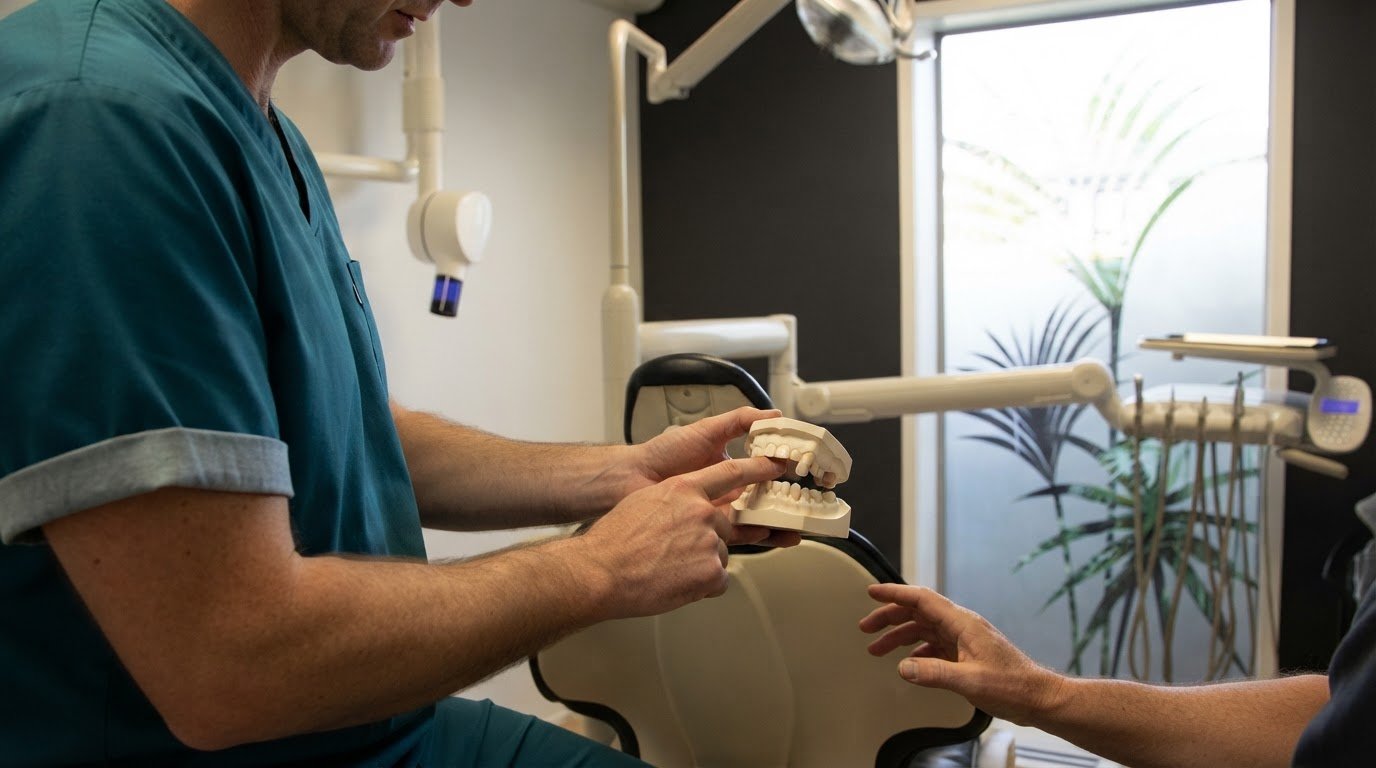
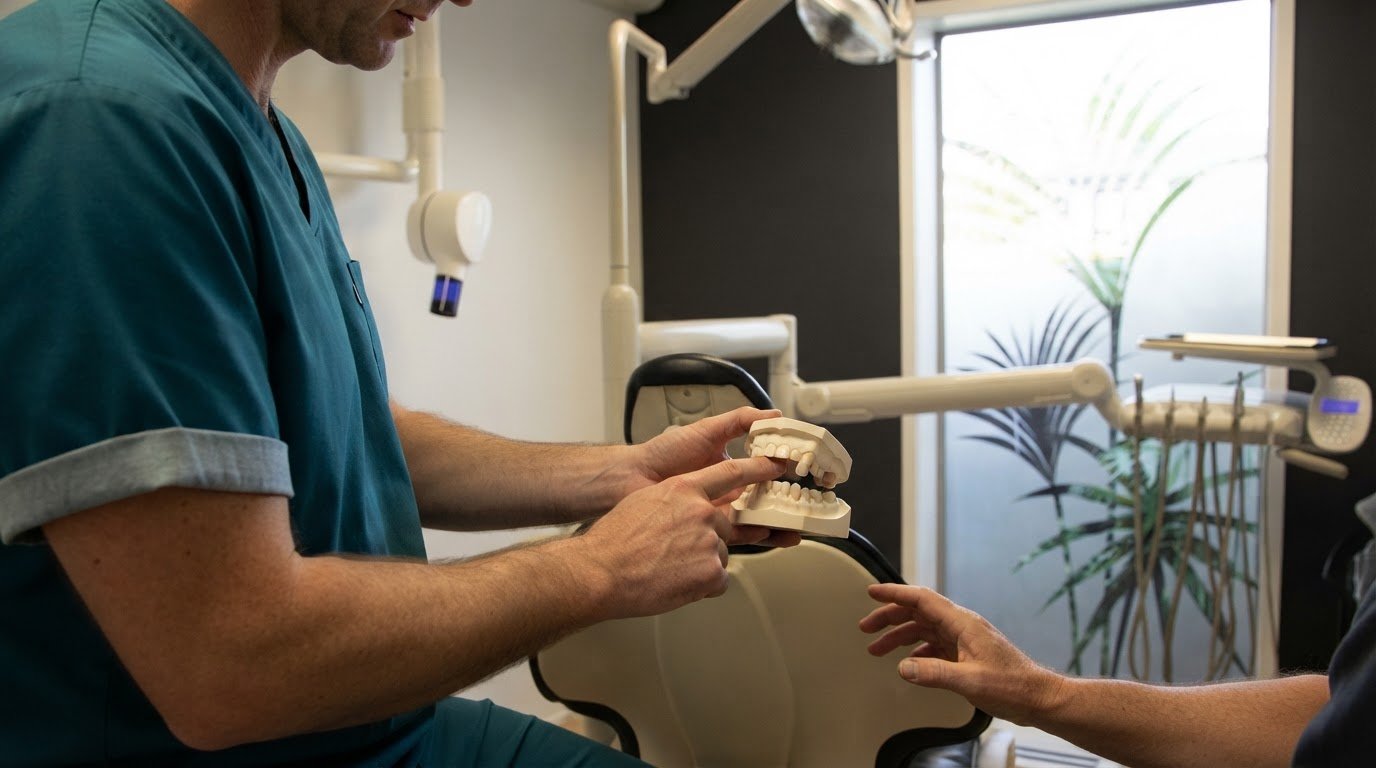
Planning starts with examining the teeth, gums and bite. The dentist checks whether the space relates to missing teeth, gum problems or tooth position, then considers how the upper and lower teeth fit together. Active gum disease or a gap caused by a missing tooth may need attention before aligner treatment. The aim is to plan movement around oral health and function, not just the width of the gap.
Aligners are custom-made, with 3D imaging used to plan tooth movements. Progress can then be compared with the intended result. If teeth haven’t moved as planned, additional aligners, sometimes called refinements, may be needed to continue or adjust movement. A plan for fixing gapped teeth with Invisalign should account for progress reviews, since refinements can extend treatment beyond the initial estimate.
When choosing an Invisalign provider in New Zealand, look for a dentist who assesses gum health, missing teeth, gap size and bite before outlining treatment. They should explain the proposed movement, likely timeline and how progress or refinements will be managed. This helps you understand the reasoning behind the plan and what may shape its duration.
Can Invisalign fix a gap in front teeth?
Clear aligners can close many front-tooth gaps, including gaps up to 6 mm without additional treatment. Risks include beginning tooth movement before gum problems are addressed, or closing a gap without considering how the upper and lower teeth fit together. A dentist assesses these factors to plan movement that supports a functional bite as well as the appearance of the smile.
How aligners close gaps
Clear aligners apply planned pressure in stages, guiding teeth towards positions that reduce the space between them. Each custom tray represents part of that movement, rather than forcing teeth together at once. Small gaps, particularly where one or two teeth have shifted, often respond well. For people considering fixing gapped teeth with Invisalign, the planned movements matter because they shape how the gap closes and how neighbouring teeth sit afterwards.
Treating gaps alongside alignment issues
Some treatment plans close a front gap while also correcting other tooth-position concerns. For example, a rotated or crowded neighbouring tooth may need to move before the space can close neatly. The plan must account for the upper and lower teeth working together, not just the visible gap. This broader approach can change the movement sequence and treatment duration. It also explains why fixing gapped teeth with Invisalign involves assessing more than the front teeth alone.
Daily wear and aligner replacement
Aligners need to be worn for 20 to 22 hours a day, with removal for eating and brushing. Teeth move while the trays apply pressure, so long periods without them can interrupt the planned sequence. Patients generally change to a new set approximately every two weeks. Consistent wear helps each tray guide the movement intended for that stage of treatment.
Because aligners are removable, you can eat without working around a fixed appliance. Take them out for meals, then brush before putting them back in. This helps prevent food from sitting against teeth beneath the trays. Cleaning your teeth and aligners also supports oral hygiene while clear trays cover your teeth for much of the day.
Not every gap should be closed with aligners alone. Gum problems or a space caused by a missing tooth may need attention first. For some upper-tooth gaps, a dentist may attach composite to affected areas to help teeth move properly during aligner treatment. This combines restorative support with tooth movement, rather than expecting trays to address every cause of spacing.
For a front gap, the treatment plan should explain how aligners will close the space, whether other teeth need movement and whether restorative support is appropriate. Discussing clear aligner treatment can help clarify how these factors fit together.
Retainers and preventing gaps from reopening
Closing a gap changes tooth position, but teeth can shift again after aligner treatment. The American Association of Orthodontists advises that teeth may move without consistent retainer wear. Retainers help hold the new positions, including spaces between the front teeth or lower teeth. Retention continues after active treatment, so it needs to be part of the plan from the beginning.
Retainers are usually worn nightly after Invisalign treatment to help keep a gap closed. They need to be worn for life to help prevent the space reopening. The exact instructions depend on the treatment plan, but consistency is key: skipping nights can allow movement, even when the teeth looked aligned at the end of treatment. A retainer isn’t a one-off finishing step.
Adults can develop new gaps as teeth change position over time. For example, a space between the lower front teeth may appear as neighbouring teeth shift. Missing teeth can also leave room for nearby teeth to move, changing the spaces between them. These causes matter after alignment treatment because a retainer preserves tooth position, but it doesn’t replace an assessment of a new or changing gap.
Gum health also affects tooth stability. Advanced gum disease can damage the bone supporting teeth, leaving them loose and more likely to move. If a gap is widening or teeth feel loose, the cause matters more than simply closing the space. Addressing the underlying gum problem is important before planning further tooth movement, because aligners or retainers don’t treat gum disease itself.
Spaces between teeth can affect gum comfort. Food particles may become trapped in a gap, irritating and swelling nearby gums. This can contribute to gingivitis, infection, bleeding and pain. For example, a lower gap that repeatedly catches food may need attention for both tooth position and gum health. Cleaning around the space helps, but persistent soreness or bleeding calls for a dental assessment.
Some people prefer to think of a retainer as a short-term measure. Long-term retention helps maintain the result for as long as the teeth are meant to stay in their new position. If a retainer feels tight after being left unworn, that can signal tooth movement. Don’t force it into place; arrange an assessment so the fit and tooth position can be considered safely.
Retainer care is part of protecting the result, not a separate cosmetic choice. Follow the wear schedule given for your treatment and keep the retainer clean, so it can sit properly over the teeth. If it’s lost, damaged or no longer fits, prompt advice can help address movement before a small change becomes a noticeable gap. Ongoing reviews also help monitor tooth position and gum health.
Comparing Invisalign with veneers, bonding, and braces
These options address gaps in different ways. Invisalign and traditional braces move teeth, while bonding and veneers change how teeth look. The distinction matters if a gap reflects tooth position, tooth shape or both. For example, moving teeth may suit a spacing problem, while changing tooth appearance can address a space linked to small teeth.
Invisalign uses removable clear aligners to guide tooth movement. Patients who prefer a discreet-looking option may value that the trays can be removed for eating and brushing. The approach can close spaces while correcting other alignment concerns, but it requires consistent daily wear. It changes tooth position rather than adding material to make teeth appear wider.
Traditional braces also move teeth, using fixed appliances rather than removable trays. They may be considered when the treatment plan calls for tooth movement that braces can provide. The choice between braces and clear aligners depends on tooth position, the bite and the planned movement. A dental assessment helps determine which approach fits those needs.
Dental bonding uses composite material to alter a tooth’s shape or appearance, which can make a small space look closed without moving the teeth. It may suit a patient whose teeth are well positioned but appear narrow beside a gap. Bonding is described as a one-appointment treatment for gaps, and composite bonding may last 5-10 years before replacement. It doesn’t correct the position of teeth or the bite.
Veneers are another restorative option for changing the appearance of teeth. They may be considered when the concern involves tooth shape as well as spacing. Unlike aligners, veneers don’t move teeth into a new position. A dentist considers the condition of the teeth, oral health and intended appearance before discussing whether veneers are appropriate.
There isn’t one best option for every patient. If teeth need movement, Invisalign or braces may address the cause of the spaces. If tooth shape is the main concern, bonding or veneers may change the visible proportions. Some treatment plans combine approaches, such as aligners followed by bonding, when movement closes part of a gap and restorative work refines the appearance.
Ask how each option addresses your specific gap: does it move teeth, change their shape, or do both? Discussing oral health, your bite and the result you prefer helps clarify the differences. A dentist can explain the intended changes and whether the plan involves movement, restorative treatment or a combination.
What are the steps for getting Invisalign in New Zealand?
In New Zealand, getting Invisalign for a tooth gap starts with an assessment, not simply choosing trays. A dental team may use an oral examination and X-rays to assess whether clear aligners suit your teeth. The process then moves from planning to wearing a sequence of custom-made aligners, with progress reviewed along the way.
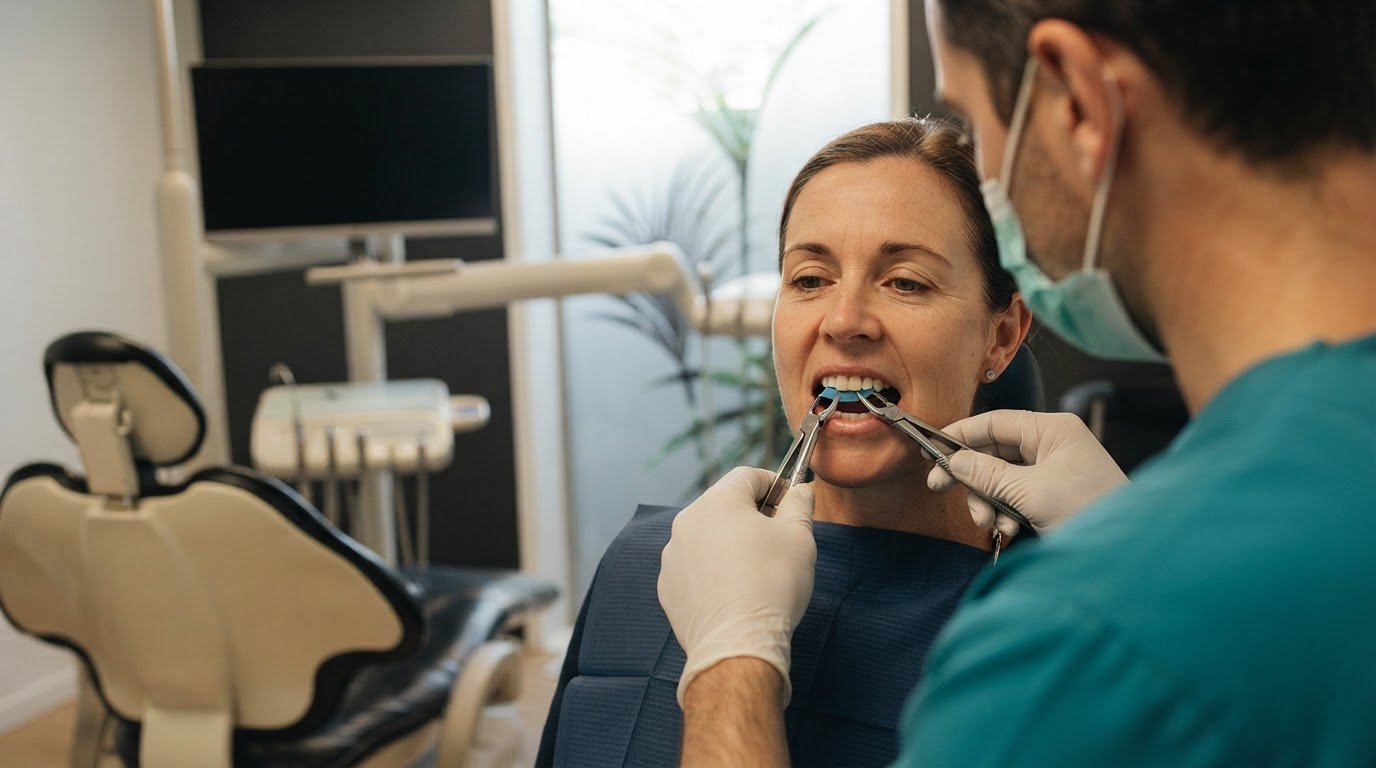
Assess the teeth and gums. The dentist examines the gap, surrounding teeth and how the upper and lower teeth meet. X-rays may help assess tooth roots and the supporting structures. This first stage can also identify gum problems or a missing tooth that needs attention before tooth movement is planned.
Plan the tooth movement. If aligners are suitable, 3D imaging helps plan how teeth are intended to move. The aligners are custom-made for the patient’s teeth, with each set designed to guide part of that movement. The plan considers the gap alongside other alignment needs, rather than treating the visible space in isolation.
Begin wearing the aligners. The treatment plan explains how long to wear the trays each day and when to move to the next set. Invisalign aligners are worn for 20 to 22 hours a day, and patients switch to a new set approximately every two weeks. They can be removed for eating and brushing.
Review progress. As treatment continues, the dentist assesses whether teeth are tracking with the planned movement. If the result needs adjustment, additional aligners may be planned. This is why the initial estimate is a guide rather than a precise finish date: the gap, other alignment needs and response to movement all influence the course.
Each stage connects to the next. For example, if an examination finds gum concerns, those need attention before aligners begin. If the gap is suitable for treatment, 3D planning maps the proposed movement, and progress reviews help assess whether the trays are doing their intended job. This gives the dentist opportunities to respond if movement differs from the plan.
Before treatment starts, make sure you understand the planned movement, daily wear routine, review process and retention expectations. These details help you know what your role involves and what the treatment sequence is designed to achieve. To discuss whether Invisalign could suit your tooth gap, arrange an Invisalign assessment.
Dental Plus: Invisalign
Dental Plus offers Invisalign for people considering treatment to close a tooth gap in Tauranga. An assessment can help determine whether aligners suit the gap, how your teeth meet and whether other dental care should come first. Routine check-ups and digital X-rays can support assessment of your teeth and oral health, while professional dental hygiene can help maintain healthy gums during care.
If aligners aren’t the right fit for your situation, a dentist can discuss the factors affecting your options and next steps. Understanding the planned tooth movement, review process and retainer needs can help you make an informed decision about treatment.
Contact Dental Plus to discuss Invisalign for your tooth gap.
Take the next step towards a smile that feels right for you
Choosing a treatment is also a chance to define what you want to change and what matters most in your day-to-day life. If you’re considering fixing gapped teeth with Invisalign, think about the result you hope to achieve and the questions you’d like answered. A clear discussion can connect your priorities with a treatment plan that considers your smile and oral health.
It’s reasonable to want to understand why a particular approach is recommended, what it involves and how you’ll maintain the result. Your assessment is an opportunity to raise those questions and talk through options without feeling rushed. The right next step is a conversation about your own teeth, goals and comfort.
Talk with Dental Plus about your smile goals, and take the first step towards feeling more informed about your options.
Frequently Asked Questions
How Much Does Invisalign Cost for Gaps?
The cost depends on the case and is given after a quote request. Factors include the gap’s size, how many teeth need movement, other alignment needs and whether additional treatment is planned. For someone in Tauranga, an assessment can clarify the proposed treatment before costs are discussed. Ask for the quote to explain what the plan includes, including any refinements or restorative work that may be recommended.
Are tooth gaps dangerous?
A gap isn’t automatically a health problem, but its cause matters. Food trapped between teeth can irritate the gums and contribute to swelling, bleeding, pain or infection. A gap that develops alongside loose teeth or changing gum health also needs attention, because advanced gum disease can affect the bone supporting teeth. If a space is new, widening or difficult to keep clean, arrange a dental assessment to identify the cause.
Does closing a gap with Invisalign hurt?
Invisalign can cause mild pressure or discomfort when a new set is fitted, and this typically subsides within 1-2 days. A new tray may feel tight for a few days as your mouth adjusts to its fit. That sensation is different from persistent or worsening pain. If discomfort continues or a tray doesn’t fit properly, contact your dentist rather than trying to alter the aligner yourself.
Does the aligner work on large gaps?
Aligners can typically close dental gaps up to 6 mm without additional treatment. Larger spaces may need a more involved plan, particularly if several teeth need movement or the bite also needs attention. A gap caused by a missing tooth or gum problems may need care before aligners begin. The dentist assesses the cause and surrounding teeth to determine whether aligners alone can address the space.
How Long Does Invisalign Treatment Last?
Treatment duration depends on gap size and other alignment needs. As a guide, small gaps measuring 1-2 mm may take 3-6 months, medium gaps measuring 2-4 mm may take 6-12 months, and larger gaps measuring 4-6 mm may take 12-18 months. These ranges don’t account for every detail; movement can take longer when other teeth also need repositioning or refinements are required.
How does the system work?
Invisalign uses custom-made trays to guide tooth movement in stages. Three-dimensional imaging helps plan how the teeth are intended to move, and each new aligner continues that sequence. The trays are removable for eating and brushing, but they need to be worn for most of the day to apply the planned pressure. The dentist reviews progress and may adjust the plan if teeth aren’t tracking as intended.
How many aligners do I need to close a gap?
The number depends on how far the teeth need to move and whether other alignment issues are included. A small front gap may take 10-15 aligners, while a larger gap with additional alignment needs could require 30 or more. Each set guides a stage of movement, so the total depends on the treatment plan. Refinements may add aligners if further movement is needed.
Can Invisalign close gaps between teeth effectively?
Yes, clear aligners can close many spaces between teeth by guiding them towards planned positions. They may suit small gaps, especially when one or two teeth have shifted. Effectiveness also depends on the cause of the spacing, gum health and how the upper and lower teeth fit together. If a gap relates to a missing tooth or gum problem, that concern may need attention as part of the treatment plan.
Comments