
Fixing Small Gaps in Teeth: Choose a Treatment for Your Gap

A small gap doesn’t always need braces. Fixing small gaps in teeth may involve dental bonding when the space is 2 mm or less, while veneers can widen teeth and orthodontics can move them into a new position. The best fit depends on the gap’s size and location, as well as what caused it.
A space between your teeth can be natural, or it may result from differences in tooth and jaw size, a missing or undersized tooth, or pressure from the tongue. If you’re considering fixing small gaps in teeth, it helps to know what can close a space without changing more of your smile than you intend.
This guide explains why gaps form and compares bonding, veneers and orthodontics, so you can see which approaches may suit different situations. It also explains why identifying the cause matters, when a gap should be assessed, and how a dentist can help you weigh a cosmetic change against treatment that moves the teeth.
Table of Contents
How can I close a small gap between my teeth without braces?
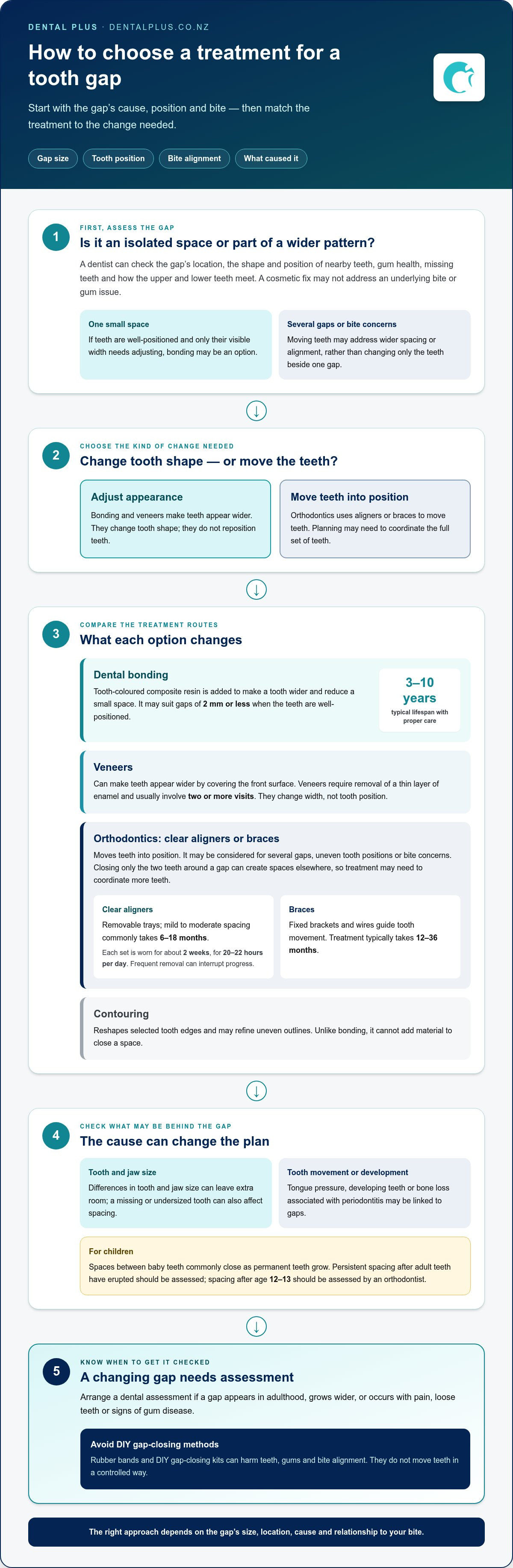
Clear aligners or braces can close small gaps by moving teeth, but treatment takes months. Clear-aligner treatment commonly takes 6-18 months for mild to moderate spacing; braces treatment typically takes 12-36 months.
Bonding and other gap treatments
Dental bonding adds tooth-coloured composite resin to a tooth, making it wider to reduce a small space. Gaps of 2 mm or less may suit bonding, which typically lasts 3-10 years with proper care. It can be a more direct option than orthodontics when the teeth are well-positioned and only their visible width needs adjusting.
Veneers also make teeth appear wider, but they cover the front surface and require removal of a thin layer of enamel. They usually involve two or more visits. Contouring does the opposite of bonding: it reshapes selected tooth edges. It may refine uneven outlines, but cannot add material to close a space. The right option depends on tooth shape and how much change is needed.
Bite alignment and tooth spacing
Bite alignment describes how the upper and lower teeth meet, while spacing refers to the gaps between them. The two can be related, so closing a visible space without considering the bite may overlook why the teeth sit apart. For example, a gap alongside other spaces may call for moving several teeth rather than widening only the two beside it.
Orthodontics moves teeth into position; bonding changes the shape of selected teeth. This distinction matters when a gap is linked to wider spacing or bite concerns. A dentist can assess tooth positions and how they meet before comparing cosmetic closure with orthodontic movement.
Clear aligners are removable trays that gradually move teeth. They can suit spacing when the planned movements fit the bite and the position of surrounding teeth. Each set is worn for about 2 weeks, for 20-22 hours per day. The trays need regular wear to apply the planned pressure; taking them out often can interrupt progress.
Braces use fixed brackets and wires to guide tooth movement. Clear aligners offer a removable alternative, but neither option simply pulls together the two teeth around a gap. Moving only those teeth can create spaces elsewhere, so treatment may need to coordinate the full set of teeth.
For a tiny space with otherwise well-aligned teeth, bonding may avoid moving surrounding teeth. For several gaps, uneven tooth positions or bite concerns, orthodontic closure may address more than appearance. Veneers can change tooth width, but they don’t reposition teeth. That’s why gap size alone doesn’t determine the treatment.
Avoid rubber bands and DIY gap-closing kits. They can harm teeth, gums and bite alignment instead of closing a gap in a controlled way. A safe comparison starts with the gap’s location, the shapes of the teeth beside it and whether the bite is affected.
Why do you have teeth gaps?
A gap between teeth is called a diastema, and it can appear between any two teeth. Causes may relate to tooth size, jaw shape, tooth movement or development. Identifying the reason matters because a cosmetic change alone may not address the condition affecting the spacing. A dental assessment can distinguish an isolated space from gaps linked to wider changes.
Children’s teeth often have spaces as they develop. Spaces between baby teeth commonly close as permanent teeth grow, and a gap may change as adult teeth replace baby teeth. If a gap remains after the adult teeth have erupted, it’s more likely to persist. Persistent spacing in children after age 12-13 should be assessed by an orthodontist.
In adults, a gap can reflect tooth and jaw size, a missing or undersized tooth, or pressure from the tongue. It may also develop when bone loss associated with periodontitis allows teeth to move sideways. A new or widening space therefore needs a different assessment from a long-standing gap that has stayed stable.
Dental bonding changes the visible width and shape of teeth using tooth-coloured composite resin. For example, resin can be added to a small tooth beside a gap, improving its proportions while reducing the visible space. Bonding changes appearance, but doesn’t move teeth or treat gum disease. Consider the cause before choosing cosmetic closure.
Gaps across the dental arch can mean more than two teeth need attention. A large front gap may affect the room available for neighbouring teeth to erupt, while several spaces can indicate wider spacing. Bite alignment matters too: how the upper and lower teeth meet can influence treatment planning. Closing one space alone may not suit a pattern involving other teeth.
A clinical examination lets the dentist assess tooth positions, gum health, missing teeth and how the bite meets. Digital X-rays or other dental imaging may help show tooth roots, developing teeth and structures beneath the gums. OPG and lateral cephalometric X-rays can be analysed when orthodontic treatment is being considered. The images help inform a plan, but don’t replace the examination.
Arrange a dental assessment if a gap appears in adulthood, grows wider, or occurs with pain, loose teeth or signs of gum disease. These changes can point to a cause that needs attention before aesthetic treatment. For a considered assessment of tooth spacing and gum health, routine dental check-ups can help clarify the next step.
Causes of gaps between teeth
A visible gap between teeth can reflect normal development or a change in tooth position. More than 95% of 6-year-old children have a space between their upper front teeth. Up to 97% of children have spaces between baby teeth, and most close naturally as permanent teeth grow. A gap that remains in an adult may have a different cause.
Inherited differences in jaw and tooth size can leave extra room across the dental arch. For example, teeth that are small relative to the jaw may sit apart even when each tooth is healthy. This can create several gaps rather than one isolated space. The pattern matters: spacing across the arch may point to a size mismatch, while a single visible gap can have another explanation.
A small or missing tooth can leave space beside it. If a tooth is narrower than its neighbours, a gap may appear on one or both sides. A missing tooth also leaves room for surrounding teeth to shift, changing the spacing further. A dentist considers the size and position of each tooth, not just the width of the most noticeable gap.
Childhood habits can affect tooth position over time. Prolonged thumb sucking may push teeth outwards, while forceful tongue pressure against the teeth during swallowing can contribute to spacing. Tongue thrusting may affect several front teeth rather than create one small gap. Habits don’t produce the same pattern in everyone, so the spaces and tooth positions help explain what may be happening.
The labial frenum, the tissue connecting the upper lip with the gum, can also contribute to a gap between the upper front teeth if it is unusually large. Its position may interfere with the teeth coming together naturally. That’s one reason a single midline space can have a different cause from gaps between several teeth.
In adults, gum disease can affect the support around teeth. Bone loss due to periodontitis may allow teeth to move sideways, creating new or widening gaps. A space that appears alongside loose teeth or gum changes should be assessed before cosmetic treatment. Closing the visible gap without addressing the underlying gum problem may not resolve why the teeth shifted.
To understand a gap, note whether it is new, widening or present between several teeth. For example, a long-standing space beside a small tooth differs from a recently widening front gap. The cause guides treatment: cosmetic changes alter tooth appearance, while other approaches may need to address tooth position, missing teeth, habits or gum health first.
Choosing treatment by gap size and location
When fixing small gaps in teeth, treatment choices depend on more than gap width. A space of 2 mm or less may suit dental bonding, which adds tooth-coloured resin to neighbouring teeth. Gaps exceeding 2-3 mm may lead to veneers or braces being considered. These guideposts need to be weighed alongside the bite, tooth shape and reason for the diastema.
Location also affects the plan. A single space between the front teeth may be addressed by changing the visible width of those teeth. Several gaps across the arch can involve more teeth and coordinated movement. If a gap exceeds 6 mm, consider options other than at-home invisible aligners. A wider gap may need a plan that accounts for surrounding teeth, not just the visible opening.
Orthodontic options move teeth rather than changing their shape. Braces treatment for gaps typically takes 12-36 months, while clear aligners take 6-18 months for most mild to moderate spacing. The timeframe reflects the movements required and whether other teeth need repositioning. Retainers help maintain tooth positions after braces or aligner treatment closes the space.
Veneers change the visible width of teeth, but preparation removes a thin layer of enamel. They usually require two or more visits. Bonding adds resin without moving teeth, while orthodontics changes tooth position. These differences matter if the bite needs correction, several spaces need closing or preserving enamel is a priority.
Comfort and eating can vary by treatment. Most conservative gap treatments are painless and require little to no anaesthesia. After dental bonding, follow any eating guidance provided by your dental professional. Orthodontics applies pressure to move teeth, while veneers involve preparing the tooth surface. The procedure and aftercare therefore differ between options.
Insurance coverage for gap treatment varies, and cosmetic-only procedures are often self-pay. Treatment cost depends on the case and is provided after a quote request. Factors include the number of teeth involved, materials and whether orthodontic movement is needed. These considerations help distinguish a small aesthetic adjustment from treatment involving several teeth or bite correction.
To narrow your options, note the gap’s width and position, and whether other spaces or bite concerns are present. For fixing small gaps in teeth, these details can help indicate whether a focused cosmetic change or broader tooth movement may suit your goal. A dental examination connects the gap’s location with enamel, tooth position and the intended result.
When veneers or orthodontics may be recommended
Veneers change how teeth look, while orthodontics moves teeth into position. The recommendation depends on whether the concern is tooth shape, spacing, bite alignment or a combination.
Veneers and enamel removal
Porcelain veneers can close a small gap by making the treated teeth wider. They require a thin layer of enamel to be removed before bonding, so the decision involves changing the tooth surface, not simply covering a space. Veneers usually take two or more visits, and results can last up to 15 years.
For example, veneers may suit a visible gap where the neighbouring teeth also need a change in shape. Their role is cosmetic: they alter tooth appearance rather than move teeth. The amount of enamel preparation and the desired shape are important parts of planning.
When orthodontics may be recommended
Orthodontics may be recommended when tooth position or bite alignment contributes to spacing. It moves teeth, making it the more conservative approach for closing gaps through movement rather than covering them. If only the two teeth beside a gap move, spaces can form elsewhere, so the plan may need to include more teeth.
For instance, several spaces or bite concerns may favour orthodontic movement over veneers. Orthodontics addresses tooth position, while veneers change the visible width of teeth. That distinction helps match the approach to the reasons behind the gap.
A gap wider than 2-3 mm may lead to veneers or braces being considered. However, the measurement alone doesn’t settle the choice. A small space with well-positioned teeth presents a different question from spacing across the arch, or a gap linked to a bite concern.
The tongue can contribute to spacing when it presses forcefully against the teeth during swallowing. If this pattern is present, cosmetic closure alone changes appearance without correcting the pressure contributing to tooth movement. Treatment planning therefore considers the cause, the position of neighbouring teeth and how the bite meets.
Crowns and veneers are distinct options, not interchangeable ways to describe closing a gap. If a tooth also needs restorative treatment, its condition helps guide the discussion. For a gap affecting otherwise healthy teeth, the key comparison is whether to alter tooth shape or move teeth orthodontically.
Discuss the intended result, enamel preparation and tooth movement during planning. A cosmetic dentistry assessment can help compare veneers with orthodontic treatment for your spacing and bite. Book a cosmetic dentistry assessment to discuss the options.
Dental Plus: Professional Dental Hygiene
Dental Plus offers Professional Dental Hygiene to support gum health before and after treatment for a tooth gap. This may be a useful step if the spacing is new or you’ve noticed gum changes, since gum health matters when planning treatment. Routine Check Ups give you the opportunity to discuss the gap, its position and possible causes. Digital X-Rays can help assess structures beneath the gums when imaging is appropriate. If you’re considering an aesthetic change, Digital Smile Design (DSD) is an optional preview tool for exploring a proposed smile plan. Contact Dental Plus in Tauranga to discuss your gap and the care that may suit your needs.
Take the next step towards a considered smile plan
The right approach to fixing small gaps in teeth starts with understanding what you want to change and how that fits with your wider dental health. Before choosing a cosmetic result, consider what matters most: preserving natural tooth structure, changing tooth shape or adjusting tooth position. These priorities can guide a clear conversation about your options.
Dental Plus offers Routine Check Ups to discuss your concerns, Digital X-Rays to support assessment where needed, and Professional Dental Hygiene to care for your gums. Together, these services can inform a thoughtful next step, rather than treating the visible space in isolation.
If you’re ready to talk through your smile goals, contact Dental Plus. A calm, informed conversation can help you feel more confident about choosing a path that suits your teeth and your priorities.
Frequently Asked Questions
What is Dental Bonding?
Dental bonding is a cosmetic treatment that uses tooth-coloured composite resin to alter a tooth’s shape or width. For a small space, resin can be added to the edges of the teeth beside it, making the gap less visible. The dentist shapes the material to suit neighbouring teeth and hardens it with a curing light. Bonding may also repair a chipped edge, so one treatment can address both concerns.
Are At-Home Gap Fixes Safe?
No. Rubber bands and DIY gap-closing kits can damage teeth and gums or affect how your bite fits together. They apply pressure without a dental assessment or controlled plan, so teeth may move in unwanted ways. Wax or products that temporarily fill a space can change its appearance, but don’t move teeth or close the gap. Avoid applying pressure yourself and seek dental advice about safe options.
Are there Any Downsides?
Yes, each approach has trade-offs. Bonding can chip or wear, and touch-ups may be needed every 5-10 years. Veneers involve removing a thin layer of enamel, so they change the tooth surface. Orthodontics moves teeth gradually and requires ongoing retainer wear to help prevent spaces returning. The relevant downside depends on whether you prefer a change to tooth shape, tooth position, or both.
Can small tooth gaps close naturally?
Sometimes, particularly in children whose baby teeth are being replaced by permanent teeth. Spaces between baby teeth commonly close as adult teeth grow into position. In adults, natural closure is uncommon without treatment. If a gap changes as a child’s teeth develop, the timing and teeth still erupting affect what happens next. A new or widening gap in an adult deserves dental assessment.
Does closing a gap hurt?
Most conservative options, including bonding, are painless and need little to no anaesthesia. Orthodontic treatment applies pressure to move teeth, so it feels different from adding resin to a tooth. Veneer preparation also differs because it involves removing a thin layer of enamel. The method, teeth being treated and work required all shape what you may feel during treatment.
Does orthodontic treatment takes longer than bonding or veneers?
Yes. Orthodontics moves teeth over months, while bonding can often be completed in one visit. Veneers usually require two or more visits, as the teeth are prepared and the veneers fitted. Clear aligners take 6-18 months for most mild to moderate gaps; braces treatment typically takes 12-36 months. These options work differently, so treatment length reflects whether teeth need movement or a change in shape.
How Does It Work?
For bonding, the dentist first selects a resin colour to blend with your tooth. They apply and shape the composite material, building up the tooth’s width to reduce the visible space. A curing light hardens the resin in seconds. The dentist then refines the shape so it sits comfortably alongside neighbouring teeth. This changes the tooth’s contour rather than moving it through the jaw.
How fast do braces close gaps?
Braces treatment for tooth gaps typically takes 12-36 months, depending on the movements needed and whether other teeth require repositioning. Some gap-closing cases may take 6 months to 1 year, while a broader treatment plan can take longer. The aim is to move teeth in a coordinated way, not simply bring the two teeth beside the gap together. Retainers help maintain their position after braces.



Comments