
Orthodontist Near Me Tauranga: Find the Right Care for Your Smile

What matters most when choosing orthodontic care: how an appliance looks, how it fits your routine, or what suits your teeth? If you’re searching for an orthodontist near me Tauranga, it’s natural to have questions about treatment options, provider roles and the commitment involved.
At Dental Plus in Mount Maunganui, orthodontic options include traditional braces, Six Month Smiles, Invisalign for adults and teens, and Invisalign First® for children aged 7 to 10. The right approach depends on an examination and an individual treatment plan, so you don’t need to choose an appliance before discussing your needs.
This guide explains the local options and what to discuss at an initial appointment, from treatment planning to day-to-day routines. You’ll also learn what to prepare and what to expect before significant treatment begins, helping you take a considered next step for yourself or your child.
Table of Contents
Searching for an Orthodontist Near Me in Tauranga? Start With Your Needs
Braces and Clear Aligners: Understand Tauranga Orthodontic Options
Choosing Orthodontic Care in Tauranga: Credentials, Treatment Fit and Trust
Your First Orthodontic Appointment: What to Prepare and Expect
Orthodontic Care at Dental Plus in Mount Maunganui: Take the Next Step
Searching for an Orthodontist Near Me in Tauranga? Start With Your Needs
Looking for orthodontic care close to home in Tauranga is a practical first step, but a map pin or directory listing can’t tell you which approach suits your teeth, age or goals. If you’re searching for an orthodontist near me Tauranga, start by noting what you’d like advice about: crowded or spaced teeth, how your bite feels, or changes in a child’s developing smile. These are useful topics to raise, not a diagnosis.
It also helps to understand provider roles. A specialist orthodontist and a general dental practice that offers orthodontic treatment are not interchangeable descriptions. A listing alone doesn’t establish an individual provider’s credentials or determine which treatment is appropriate. Dental Plus is a Mount Maunganui dental practice offering traditional braces, Six Month Smiles, Invisalign for adults and teens, and Invisalign First® for children aged 7 to 10. An examination helps guide the discussion about suitable options.
What does an orthodontic provider help assess?
An appointment can assess how the teeth meet and sit in relation to one another, as well as the concerns you want addressed. For a child, the dentist may also consider how their teeth and smile are developing. These findings help inform a conversation about possible treatment. General information about orthodontic treatment can explain the field, but it can’t replace an individual assessment or provide a personal recommendation.
Bring questions about appearance, comfort, cleaning and how treatment might fit into everyday life. The goal isn’t to choose an appliance based on a web listing. It’s to understand the patient’s needs and discuss a suitable direction after an examination.
Why local access matters during orthodontic care
Orthodontic treatment involves planned appointments, so consider the practice’s location and how visits will fit into your routine. Travel time, school or work commitments and attending appointments consistently can all affect how manageable care feels. Dental Plus is at 41 Girven Road in Mount Maunganui and serves Tauranga and the wider Bay of Plenty, offering local dental and orthodontic care.
Before an assessment, note:
What you or your child would most like to address.
Questions about treatment choices, appointments or daily routines.
Whether the concern relates to alignment, the way teeth meet or a child’s developing smile.
These notes can help keep the conversation focused without requiring you to work out the cause yourself. Explain what you’ve noticed and let the examination inform the discussion.
Orthodontic treatment is planned around an individual assessment of the patient’s teeth and needs. That personal starting point matters more than choosing an approach from a listing alone.
Braces and Clear Aligners: Understand Tauranga Orthodontic Options
Orthodontic care isn’t simply a choice between visible and discreet appliances. The right fit depends on the examination, the patient’s needs and the routines they can maintain. Dental Plus offers traditional braces, Six Month Smiles, Invisalign for adults and teens, and Invisalign First® for children aged 7 to 10. Discuss these options as part of an individual treatment plan rather than choosing from a description alone.
How do traditional braces and clear aligners differ?
Traditional braces are fixed to the teeth, while clear aligners are removable. This affects daily routines: braces stay in place, while aligners need to be managed and used according to the clinician’s instructions. Neither format is automatically the better choice. Suitability depends on the patient’s assessment and treatment plan.
When comparing options, consider what daily life may involve:
Visibility: Braces are attached to the teeth, while clear aligners are designed to be less noticeable.
Routine: Fixed braces remain in place; removable aligners require the patient to follow instructions for use and care.
Personal fit: The treatment recommendation depends on the individual assessment, not just a preference for one appliance.
Six Month Smiles is another orthodontic option at Dental Plus. Don’t treat the name as a prediction of how long an individual’s treatment will take. Discuss the recommendation and expected course of care after examination and planning. For more detail about the clear-aligner process, see the Invisalign Mount Maunganui guide.
Which ages are the confirmed Invisalign options for?
Dental Plus offers general Invisalign for adults and teens, and Invisalign First® for children aged 7 to 10. These age descriptions apply to the Invisalign options, not automatically to every orthodontic treatment. A dental assessment helps determine whether an option suits the person’s needs.
If you’re comparing orthodontist near me Tauranga options, bring practical questions to your appointment. Ask how an appliance may fit around meals, cleaning, school or work, and what follow-up appointments involve. The answers should relate to the recommended plan rather than assumptions about braces or aligners in general.
Take time to understand the proposed approach before deciding. Ask for unfamiliar terms to be explained in everyday language, and make sure you understand what following the plan involves. If you’re considering clear aligners, you can explore Invisalign care at Dental Plus as part of learning about your options.
Choosing Orthodontic Care in Tauranga: Credentials, Treatment Fit and Trust
A provider listing can help you find local care, but it can’t tell you which treatment is right for you. If you’re comparing options after searching for an orthodontist near me Tauranga, look beyond the listing name. Consider the provider’s stated qualifications, the treatment being proposed and how clearly the reasons for that recommendation are explained.
A specialist orthodontist listing and a general dental practice offering orthodontic treatment describe different provider roles. The labels aren’t interchangeable, but neither one, by itself, tells you whether a particular treatment suits your needs. A useful decision comes from understanding who will provide your care and how the proposed approach relates to your examination.
What should patients understand about provider roles?
Directories can help distinguish practitioners listed as specialist orthodontists from dental practices that provide orthodontic treatment. Treat that distinction as information about provider category, not a substitute for discussing your case. Consider the qualifications a provider states, the care being recommended and whether the explanation is clear and relevant to your concerns.
At Dental Plus, orthodontic care is provided within a broader dental practice. The practice offers traditional braces, Six Month Smiles, Invisalign and Invisalign First® for children aged 7 to 10. An appointment focuses on assessing the patient and discussing options that may suit their needs. A directory label can’t replace that individual conversation.
How does a suitable treatment plan take shape?
At Dental Plus, examination findings inform the treatment plan and cost estimate. This gives you an opportunity to understand the proposed care before significant treatment begins. Discuss the reasons for the recommendation, the options available and any relevant risks or limitations. Ask for plain-language explanations of unfamiliar clinical terms.
Informed consent means understanding the proposed care before agreeing to significant treatment. Patients must consent before significant work begins. If anything in the plan is unclear, raise it during the discussion so you can make a considered decision.
A helpful conversation connects the examination to the recommendation. Ask how the findings relate to your concern, why a particular approach is being suggested and what following the plan will involve. For a parent, it may also help to ask how the recommendation relates to their child’s dental development. These questions help you understand the reasoning without having to choose a treatment in advance.
A clear process gives you a useful basis for making a decision: the assessment informs the options, the plan explains the proposed care, and consent comes before significant treatment. This keeps the decision centred on the patient rather than a search result alone.
Your First Orthodontic Appointment: What to Prepare and Expect
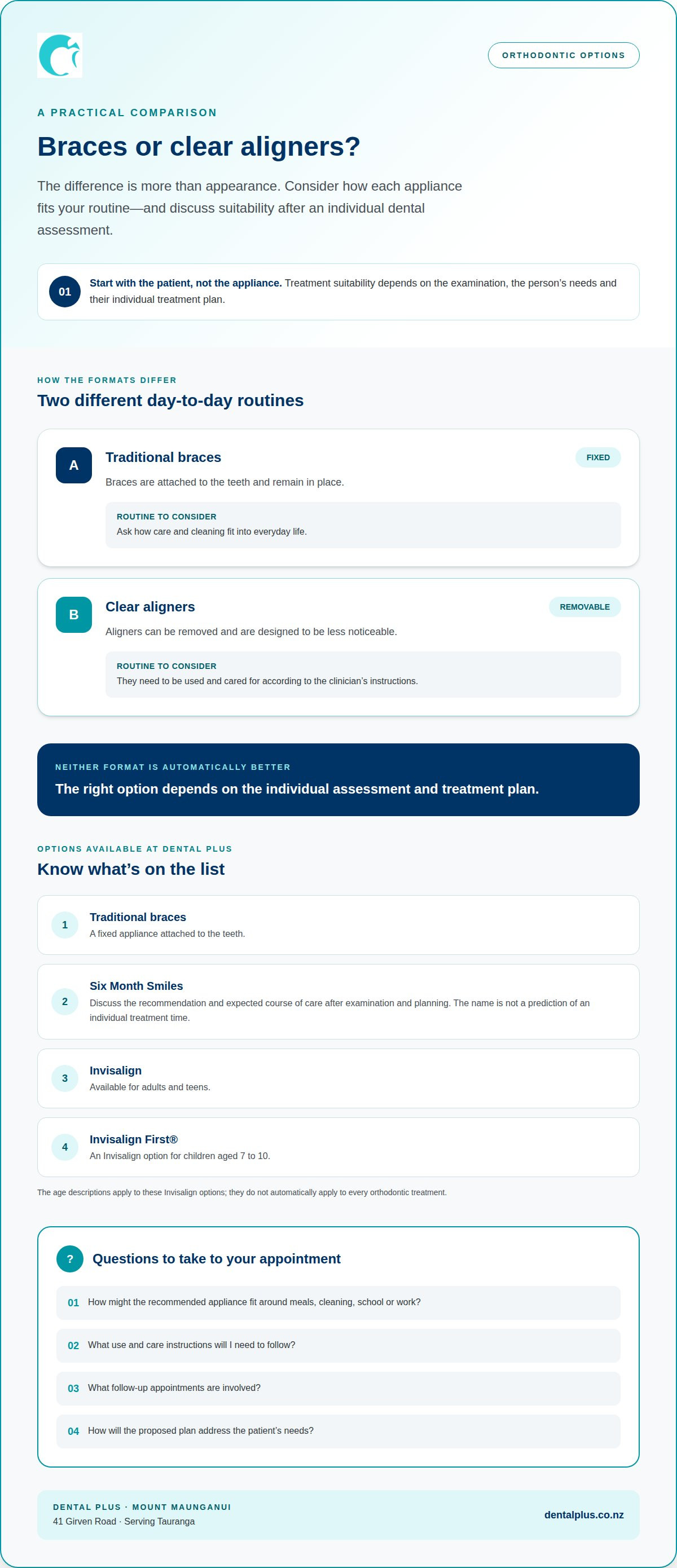
An initial orthodontic appointment is a chance to understand your options, not a commitment to begin treatment. If you’re looking for an orthodontist near me Tauranga, preparing a few details can help you make the most of the visit. The process moves from sharing relevant information to an examination, a discussion of options and a review of the proposed plan.
What information should patients bring?
Bring an accurate medical and dental history for the patient, including details that may be relevant to dental care. Let the practice know about any changes to that history. If the appointment is for a child, a parent or caregiver can help provide the information and explain what they’ve noticed.
Write down your questions so they’re easy to remember. You might want to discuss treatment options, how an appliance could fit into daily routines or any concerns about comfort. Follow the instructions provided for the appointment, and describe what prompted you to seek advice without trying to diagnose the issue yourself.
What happens after the examination?
The examination gives the dentist information to discuss the patient’s needs and relevant treatment choices. Ask for the findings and any clinical terms to be explained clearly. This helps connect the recommendation to the patient’s circumstances, instead of leaving you to interpret an appliance description or make assumptions based on someone else’s experience.
After the examination, Dental Plus provides a treatment plan and cost estimate. Review what care is proposed, what the plan involves and any questions you still have. Significant work begins only after the patient has given consent, so you can understand the proposal before deciding whether to proceed.
Use these steps to stay organised:
Prepare: Bring accurate medical and dental history details, and note your main concerns and questions.
Attend the examination: Describe what you’ve noticed and follow the instructions provided for your visit.
Discuss options: Ask how the findings relate to the treatment choices being considered.
Review the plan: Read the treatment plan and estimate, raise anything unclear, and decide about consent before significant treatment begins.
Appointments are required. If you need to cancel, appointments cancelled with less than 24 hours’ notice may incur a cancellation fee. Plan ahead and keep the practice informed if your arrangements change.
Preparing these details can make the conversation more focused, whether you’re arranging care for yourself or your child. Arrange an orthodontic appointment with Dental Plus to discuss your needs and begin with an examination.
Orthodontic Care at Dental Plus in Mount Maunganui: Take the Next Step
If you’re weighing up local care after searching for an orthodontist near me Tauranga, Dental Plus offers orthodontic treatment in a community-focused dental practice. The team discusses options following an examination, so you can make decisions with a clearer picture of the proposed care.
How Dental Plus supports patients considering orthodontic treatment
Orthodontic options at Dental Plus include traditional braces, Six Month Smiles, Invisalign for adults and teens, and Invisalign First® for children aged 7 to 10. These options aren’t one-size-fits-all. An examination and individual plan help shape a discussion about which approach may suit the patient and their circumstances. For an overview of fixed braces, the traditional braces Tauranga guide offers further reading.
Dental Plus also provides sedation dentistry. If you have concerns about treatment or what an appointment may involve, share them with the team so they can be included in the conversation. The practice brings orthodontic care together with a broader dental setting, without promising a particular result.
What should patients know about appointments and assistance?
Services are by appointment only. The practice is located at 41 Girven Road, Mount Maunganui, Tauranga, NZ 3116, and serves Tauranga and the wider Bay of Plenty. When planning a visit, keep the opening hours in mind:
Monday to Thursday: 8:00 am to 5:00 pm
Friday: 8:00 am to 4:00 pm
Closed weekends and public holidays
To arrange an appointment, call 07 575 5808 or email info@dentalplus.co.nz. Appointments cancelled with less than 24 hours’ notice may incur a cancellation fee.
Use your appointment to discuss the proposed plan, ask about practical considerations and raise concerns that matter to you or your child. Bring accurate medical and dental history details, follow instructions and attend scheduled appointments. These steps help the team understand the patient’s circumstances and support a focused conversation about care.
Choosing a local practice also means finding a setting where you feel comfortable asking questions. Dental Plus offers orthodontic options for Tauranga adults and families. Arrange an orthodontic appointment with Dental Plus by phone or email to discuss your needs.
Take a confident first step towards your smile
Choosing an orthodontist near me Tauranga doesn’t mean you need to arrive with every answer. Be ready to talk about what matters to you, what you hope to understand and any concerns you’d like addressed. A thoughtful first conversation can help you identify a clear next step.
Dental Plus brings 30+ years of combined dental experience and has cared for 14,300 smiling clients. The practice aims to create a friendly, caring setting where patients can discuss their needs and make informed decisions.
Your next step can be arranging a visit and bringing the questions you’d like answered. Arrange an appointment with Dental Plus to start a personal conversation about your smile. Take it one step at a time.
Frequently Asked Questions
Can adults get orthodontic treatment in Tauranga?
Yes. Adults in Tauranga can explore orthodontic treatment, including Invisalign, which Dental Plus offers for adults and teens, as well as traditional braces. Whether an option is suitable depends on an examination and the patient’s dental needs, so age alone doesn’t determine the plan. If you’re comparing an orthodontist near me Tauranga, use an appointment to discuss your goals, routine and concerns about treatment.
At what age can a child have Invisalign First®?
Invisalign First® is for children aged 7 to 10. This age range describes who the option is designed for, but it doesn’t mean it’s suitable for every child. A dental assessment is needed to consider the child’s teeth and needs. Parents can note what they’ve observed and bring questions about daily routines, appliance care and the proposed plan.
How long does orthodontic treatment take?
There isn’t one treatment duration that applies to everyone. The expected timeframe depends on the patient’s needs and the plan recommended after examination. The name Six Month Smiles shouldn’t be taken as a promise that an individual’s treatment will finish within a particular period. Ask the dentist to explain the expected course of care for the proposed option, including what can affect progress and why attending planned appointments matters.
Is orthodontic treatment uncomfortable?
People’s experiences can differ, so discuss comfort with the dentist in relation to the recommended treatment. If you’re anxious about dental care, mention this before treatment planning so your concerns can be considered. Dental Plus offers sedation dentistry as a patient-comfort option. The dentist can discuss whether it’s relevant to your care; it doesn’t guarantee a particular experience or remove the need to follow treatment instructions.
Can WINZ help with urgent dental treatment at Dental Plus?
Potentially. Dental Plus is a registered WINZ dental practice, and eligible people may receive up to $1,000 for urgent or essential dental treatment, limited to one payment per year. Eligibility includes being a New Zealand citizen or permanent resident, normally living in New Zealand, being aged 16 or older, meeting an income and asset assessment, and having an urgent or essential need. Any additional treatment costs may be the patient’s responsibility.
Is Dental Plus open on weekends for orthodontic appointments?
No. Dental Plus is closed on weekends and public holidays, and all services are by appointment. The practice’s hours are Monday to Thursday, 8:00 am to 5:00 pm, and Friday, 8:00 am to 4:00 pm. Appointments cancelled with less than 24 hours’ notice may incur a cancellation fee. Plan around the weekday hours when arranging visits alongside work, school or other commitments.
This article is for general information only and is not dental advice. Always seek professional dental care for any dental condition.
Comments