
Signs You Need a Dental Crown: When a Filling Won’t Do

Updated: Nov 7
A small filling can’t always protect a weakened tooth. Signs you need a dental crown include a crack, extensive decay, a large filling that leaves little natural tooth structure, or a tooth that needs protection after root canal treatment. A crown covers the tooth to help restore its strength and function.
It’s understandable to hope a filling will be enough, especially if the tooth doesn’t hurt. But the right option depends on how much healthy tooth remains, where the tooth sits, and the pressure it takes when you bite. A tooth can be vulnerable before discomfort makes the problem obvious.
This article explains signs that may call for a crown, how dentists compare crowns with fillings, and why a crown is often recommended after root canal treatment. You’ll also learn how crowns can protect a damaged tooth and restore its shape and everyday function, helping you feel prepared to discuss your care.
Table of Contents
1. What Are the Signs You Need a Dental Crown to Protect a Damaged Tooth?
A crack can compromise a natural tooth, even if it looks like a fine line. Cracks don’t heal on their own and may spread under biting pressure, causing further damage. A minor crack may need monitoring rather than an immediate crown, while a deeper fracture can expose inner tooth layers and cause pain or sensitivity. A crown covers the tooth to help protect it from further damage. Whether it’s suitable depends on the crack’s depth and how much healthy tooth remains.
For a cracked or fractured tooth, a dentist examines it, checks your bite, and considers how much structure is missing. X-rays can reveal damage that isn’t visible during an examination, including problems beneath the surface. The dentist may also ask when pain occurs, such as when you bite or release pressure. These findings help distinguish a small chip from a fracture that has weakened the tooth. Even without pain, a tooth may need assessment because structural damage doesn’t always cause immediate symptoms.
Other signs include a broken cusp, a large piece missing, or sensitivity to hot or cold. A small chip may not need a crown, while extensive breakage can leave too little strong tooth for a filling to protect. A dark line beside an older metal crown may be harmless, but it can also signal deterioration or decay. Appearance alone can’t establish the cause, so an examination and, where useful, an X-ray can help identify what’s happening beneath the surface.
A loose crown needs prompt dental assessment because its seal may no longer protect the tooth underneath. Bacteria can get beneath the seal, and the exposed natural tooth may develop decay or sustain further damage. A minor chip may be repairable; a large fracture, poor fit, or underlying decay may mean the crown needs replacement. If it feels high when you bite, a dentist can assess your bite and adjust the crown if needed. Don’t assume it’s sound just because it remains in place.
Crown materials include porcelain, ceramic, metal and combinations of these, selected according to the tooth’s position and function. Most dental crowns last 10–15 years or longer with proper care, although wear and fit can change over time. A dentist assesses the tooth and crown rather than relying on age alone.
Dental insurance cover depends on your policy, so a clinical sign alone doesn’t establish whether a crown is covered. ACC cover also depends on the circumstances and applicable eligibility rules. Don’t assume a crown is covered without an assessment of the claim.
2. When Is a Dental Crown Required Instead of a Filling?
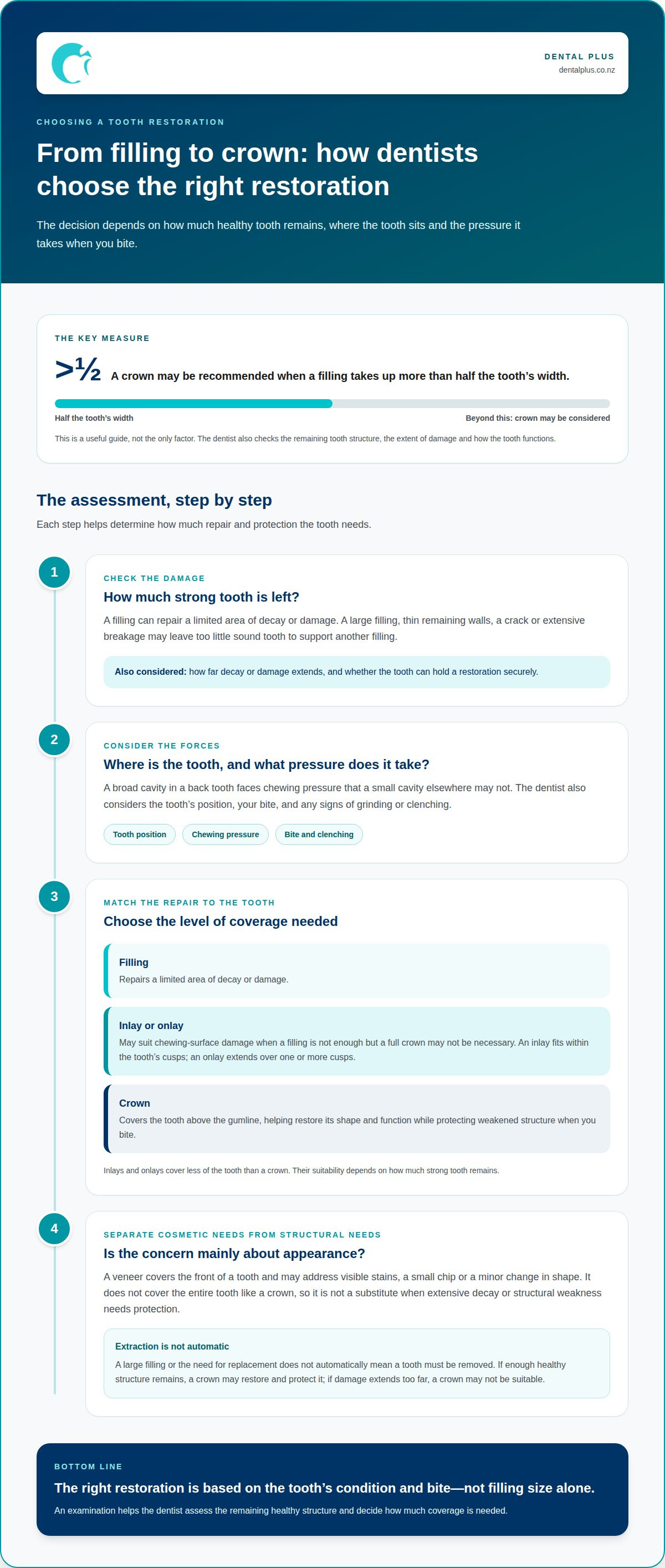
A filling repairs a limited area of decay or damage. A crown may be recommended when too little strong natural tooth remains to support a filling, or when the tooth needs broader protection. One useful guide is the size of the filling: a crown may be recommended when it takes up more than half the tooth’s width. The dentist also considers the tooth’s position, chewing pressure, and whether grinding or clenching adds force.
Several large fillings in one tooth can leave its remaining walls thin and weak. As a large filling wears, the surrounding tooth can become more vulnerable to fractures. Replacing it with another filling may not provide enough support if little sound tooth structure remains. A crown covers the entire tooth above the gumline, helping restore its shape and function while protecting the weakened structure when you bite.
The decision isn’t based on filling size alone. A dentist assesses how much healthy tooth remains, how far decay or damage extends, and whether the tooth can hold a restoration securely. For example, a broad cavity in a back tooth faces chewing pressure that a small cavity elsewhere may not. The tooth’s bite and any signs of clenching or grinding also affect which restoration can support it.
An inlay or onlay may be an option when damage affects the chewing surface and a standard filling isn’t enough, but a full crown may not be necessary. An inlay fits within the tooth’s cusps; an onlay extends over one or more cusps. These restorations cover less of the tooth than a crown, so their suitability depends on the amount and strength of the remaining structure.
A veneer serves a different purpose. It covers the front of a tooth and may address visible stains, a small chip, or a minor change in shape. It doesn’t cover the entire tooth like a crown, so it isn’t a substitute when extensive decay or structural weakness needs protection. The key question is whether the concern is mainly cosmetic or whether the tooth needs support to function.
Extraction isn’t automatic just because a tooth has a large filling or needs replacement. If enough healthy structure remains, a crown may restore and protect the tooth; if damage extends too far, a crown may not be suitable. A crown or veneer assessment can help clarify which approach fits the tooth’s condition and the result you’re seeking.
3. Persistent tooth pain and sensitivity
A brief twinge from cold water can have several causes, but recurring sensitivity deserves attention. Notice whether discomfort follows hot tea, cold drinks, sweet food, or biting down. These triggers help describe the problem, but don’t identify its cause on their own. A damaged filling, decay, worn enamel, or a crack can all make a tooth react. Persistent pain is a reason to arrange a dental assessment, especially if it disrupts eating or sleep.
Sensitivity to hot or cold can occur when worn or cracked enamel exposes the more sensitive layer beneath. A sharp response that stops quickly differs from discomfort that lingers after the drink is gone. Lingering discomfort can point to deeper irritation, decay, or damage within the tooth. A crown can seal and protect a weakened tooth, but it isn’t the automatic answer to every temperature twinge.
Sweet foods can also provoke pain if decay or a damaged restoration exposes vulnerable tooth structure. For example, discomfort around an old filling when eating fruit or chocolate may warrant a closer examination. The dentist checks the filling’s edges, the surrounding tooth, and your bite. X-rays can help assess damage that isn’t visible during the examination. These steps help distinguish a problem that needs a filling from damage requiring broader support.
Pain when chewing is another useful clue. A cracked tooth can hurt under pressure, while excessive wear can shorten teeth and contribute to sensitivity or pain. The dentist considers where the discomfort occurs and whether it appears when you bite or release pressure. They also assess the tooth’s shape and how it meets neighbouring teeth. A misshapen or worn tooth can affect comfort and function, but the cause guides treatment.
If you already have a crown, persistent pain or worsening sensitivity still needs assessment. Decay beneath the crown, nerve irritation, or a poor fit can cause symptoms. Lingering sensitivity can also relate to exposed dentine, a small leak at the crown’s edge, or a cavity beneath it. An examination, bite check, and X-ray can help identify the source before the dentist recommends repair, adjustment, or replacement.
Before your appointment, note practical details: which tooth hurts, what triggers the sensation, and whether it fades or lingers. Mention any recent filling, crown, or change in your bite. These observations help the dentist focus the examination, while the findings determine whether treatment should restore a small area or protect more of the tooth. Prompt assessment can clarify the cause before further damage limits the available options.
4. Crowns after root canal treatment
A root canal treats damaged pulp inside a tooth, but doesn’t replace its outer structure. Removing the pulp can leave the tooth weak and brittle, especially if decay or damage has already reduced its strength. A crown is often recommended after root canal treatment because it covers the tooth and helps protect it from breaking during everyday biting and chewing. The aim is to preserve the treated tooth and support its function.
The need for a crown depends on the tooth’s condition after treatment, not simply on having had a root canal. A dentist assesses how much natural tooth remains, where the tooth sits, and the pressure it takes when you bite. A back tooth used for chewing may face different forces from a front tooth. Existing cracks or extensive decay can further weaken the remaining structure.
During assessment, the dentist examines the treated tooth and may use X-rays to evaluate its condition. They also check how the upper and lower teeth meet, since an uneven bite can put extra pressure on a weakened tooth. These findings help determine how much coverage is needed to protect it. The crown is custom-made to fit the prepared tooth and restore its shape, appearance, and function.
Delaying a recommended crown can leave a brittle tooth exposed to chewing forces. A new crack may widen, or a piece of the tooth may break away. Further damage can make the tooth harder to restore and may affect long-term oral health. If decay or infection develops, the problem can worsen; in severe cases, tooth loss may follow. A crown helps protect the treated tooth, but ongoing care is still important.
Everyday care still matters after placement. The crown covers the visible part of the tooth, while the natural tooth beneath it remains and needs cleaning. Brush twice daily with fluoride toothpaste, and keep routine dental check-ups so changes around the crown can be assessed. The crown itself cannot decay, but decay can affect the tooth at its edge. Have a loose or damaged crown assessed promptly to protect the underlying tooth.
If you’ve had a root canal and haven’t yet had the recommended crown placed, arrange a dental assessment to discuss the next step. Contact the dentist sooner if the treated tooth develops worsening pain, a new fracture, or a break. These changes can indicate further damage and need timely attention. Protecting a weakened tooth helps it continue contributing to comfortable chewing and overall oral health.
5. Benefits of dental crowns
A dental crown can do more than cover visible damage. By enclosing a weakened tooth, it helps restore shape and strength for biting and chewing. This support can be useful when a large cavity, fracture, or previous restoration has left less natural tooth structure. The practical benefit is a tooth that can take part in everyday function, rather than leaving damaged areas exposed to biting pressure. A crown also helps preserve the natural tooth when it remains suitable for restoration.
For teeth worn down by chronic grinding, a crown can restore lost height. Shortened teeth may affect how the upper and lower teeth meet, as well as chewing comfort. Restoring the tooth’s shape can help it fit the bite more naturally. However, grinding can still put force on a crown, so protecting the restoration from ongoing pressure matters. A dentist assesses the bite and amount of wear before recommending how to restore the tooth.
A crown can also improve the appearance of a discoloured or irregularly shaped tooth. For example, a tooth with a marked colour change or uneven outline may look more consistent when covered. The right approach depends on whether the concern is cosmetic or reflects deeper damage. A crown covers the entire tooth, while a veneer covers only its front surface. That difference matters when the tooth needs structural support as well as an appearance change.
For a missing tooth replaced with a dental implant, the crown is the visible replacement attached to the implant. Crowns can also anchor a dental bridge in place. In both situations, the crown contributes to the visible shape and chewing surface. A properly placed crown should fit the natural bite and allow normal chewing and speaking. If it feels too high or makes the bite uneven, a dentist can assess and adjust the fit. Patients exploring options for extensive restorative work, such as dental implants and crowns abroad, can look to facilitators like mydorahealthcare.com for information on international care.
With proper care, most dental crowns last 10–15 years or longer. Their lifespan depends on factors such as wear, fit and the health of the natural tooth beneath. A crown itself cannot decay, but the underlying tooth remains vulnerable, particularly near the gumline. Brush twice daily with fluoride toothpaste and avoid chewing hard objects such as ice or pens. Those habits help care for the crown and the tooth it covers.
A crown protects and restores, but it doesn’t make a tooth invulnerable or guarantee that decay or infection can’t occur. Regular dental assessments help identify changes around its edges, while a bite check can identify pressure that may affect the restoration. If you’re considering how a crown could restore a damaged tooth’s function or appearance, book a crown and veneer assessment.
Dental Plus: Crowns & Veneers
Dental Plus provides crowns and veneers to restore damaged teeth and address changes in appearance in Tauranga. If a tooth is cracked, weakened by a large filling, or needs protection after root canal treatment, an assessment can help clarify whether a crown is suitable. A routine check-up and digital X-rays can support evaluation of the tooth’s condition and the structure beneath its surface.
The recommendation depends on how much healthy tooth remains, the tooth’s position, and the pressure it takes when you bite. If the concern is mainly a visible chip or change in shape, a veneer or another option may be more appropriate than a crown. Dental Plus can discuss the findings and explain the options for your tooth. Contact Dental Plus in Tauranga to arrange an assessment.
Take the next step towards protecting your tooth
Changes in comfort or appearance can be easy to put off, especially when they come and go. Noticing signs you need a dental crown is a useful prompt to find out what’s happening, not a diagnosis in itself. A timely conversation can help you understand the tooth’s condition and consider the options before deciding how to proceed.
Before an appointment, note what you’ve noticed: which tooth feels different, what triggers discomfort, and whether its appearance has changed. These details give your dentist a helpful starting point. Mention any previous treatment on that tooth, such as a root canal or large filling, so the discussion can focus on its history and current needs.
If you’re ready to discuss your concerns and possible next steps, contact Dental Plus to discuss your options. Taking that first step can help you move forward with a clearer understanding and greater confidence in your care.
Frequently Asked Questions
What Are the Signs You Need a Dental Crown to Protect a Damaged Tooth?
Cracks, a broken cusp, extensive decay, or a large existing restoration can suggest that a tooth needs more support than a filling provides. A tooth may also need protection after root canal treatment. These signs don’t confirm the best treatment by themselves. A small chip, for example, may need a different approach from a fracture affecting deeper tooth structure. An examination helps clarify the extent of damage.
Are There Any Risks or Downsides?
A dental crown requires shaping the tooth, which removes some natural tooth structure. Mild soreness may occur afterwards and usually settles quickly. A crown can also chip, loosen, or wear, and decay can still affect the natural tooth at its edge. These possibilities make ongoing care important. For instance, have a crown that feels loose or changes your bite assessed rather than ignoring it.
What Happens During the Dental Crown Procedure?
The dentist removes damaged or decayed areas, shapes the tooth, then takes an impression or digital scan. A temporary crown protects it while the permanent crown is made. At the next appointment, the dentist checks the permanent crown’s fit and appearance before securing it. Each appointment typically lasts about 1–2 hours. Local anaesthesia is commonly used to keep the procedure comfortable, and mild soreness may follow.
What is a Crown?
A dental crown is a protective cap fitted over a natural tooth to restore its strength, function, and appearance. It covers the prepared tooth and is secured with dental cement. Crowns can be made from porcelain, ceramic, metal, or a combination of materials. The choice can depend on whether the tooth is near the front or takes substantial chewing pressure at the back.
When Is a Dental Crown Required Instead of a Filling?
A crown may be recommended when decay or damage leaves too little strong tooth structure for a filling to support. One useful guide is when a filling takes up more than half the tooth’s width, though size isn’t the only consideration. The dentist also weighs the tooth’s position, remaining healthy structure, and bite forces. For chewing-surface damage, an inlay or onlay may sometimes repair the tooth without fully covering it.
What are the common signs that a tooth may need a dental crown?
Common clues include a visible crack, a large piece missing, a worn-down tooth, or a filling that occupies much of the tooth. A tooth can also be structurally weak without causing pain. For example, a back tooth with a broad restoration may be vulnerable under chewing pressure. These signs warrant assessment, but don’t automatically mean a crown is the only suitable option.
When does a cracked or broken tooth need a crown?
A crown may be considered when a fracture weakens a substantial part of the tooth or exposes its inner layers. A small chip or minor crack may need less extensive care. The dentist checks the fracture’s depth, how much tooth remains, and whether biting makes it move or hurt. A crack extending beneath the gum or involving the root can affect whether the tooth can be restored.
Can tooth pain or sensitivity indicate the need for a dental crown?
Yes. Persistent pain or sensitivity can indicate a crack, worn enamel, decay, or damage beneath an existing restoration. For example, pain that lingers after hot or cold food may point to deeper irritation than a brief twinge. A crown can protect a weakened tooth in some cases, but symptoms alone don’t establish the cause. An examination helps distinguish crown-related damage from problems needing another treatment.


Comments