
Traditional Braces for Complex Cases: When They May Suit

Updated: Nov 6
The less visible option isn’t automatically the better fit for complex teeth. Traditional braces for complex cases can offer greater control over individual tooth movement, making them a strong option for severe rotations, vertical misalignments and bite irregularities. Invisalign can also address some complex concerns, including certain bite issues and rotated teeth, so the choice isn’t simply fixed braces versus a discreet look.
It’s understandable to weigh appearance, comfort and how treatment fits into daily life, especially as an adult. But the tooth movements needed matter just as much: fixed braces stay in place, while clear aligners need to be worn consistently to work as planned.
This guide compares traditional braces and Invisalign for complex dental concerns, including severe rotations, bite irregularities and differences in dental structure. You’ll also learn how treatment requirements and adult preferences can help shape the choice, so you can better understand which approach may suit your needs.
Table of Contents
Braces or Invisalign: Which Is More Effective for Complex Cases?
For complex orthodontic concerns, the most effective option depends on the tooth movements and bite changes required. Fixed braces and Invisalign work differently, so the right comparison starts with treatment goals, not appearance alone.
Effectiveness in complex cases
Effectiveness means achieving the planned tooth alignment and bite correction through controlled movement. Traditional braces for complex cases can provide greater control over individual tooth movement, which may help with severe rotations and vertical misalignments. Invisalign uses a series of custom-made aligners to move teeth gradually and can treat some complex concerns. The key difference is the type of movement each method can manage.
Features and causes of complexity
An orthodontic case may be complex when several alignment or jaw concerns interact. Examples include severe crowding or spacing, overbites, underbites, crossbites, rotated or impacted teeth, jaw discrepancies and previous treatment relapse. Early loss of baby teeth, thumb sucking, mouth injuries, and jaw size or structure can contribute. Identifying the pattern helps shape the treatment plan.
Treatment duration
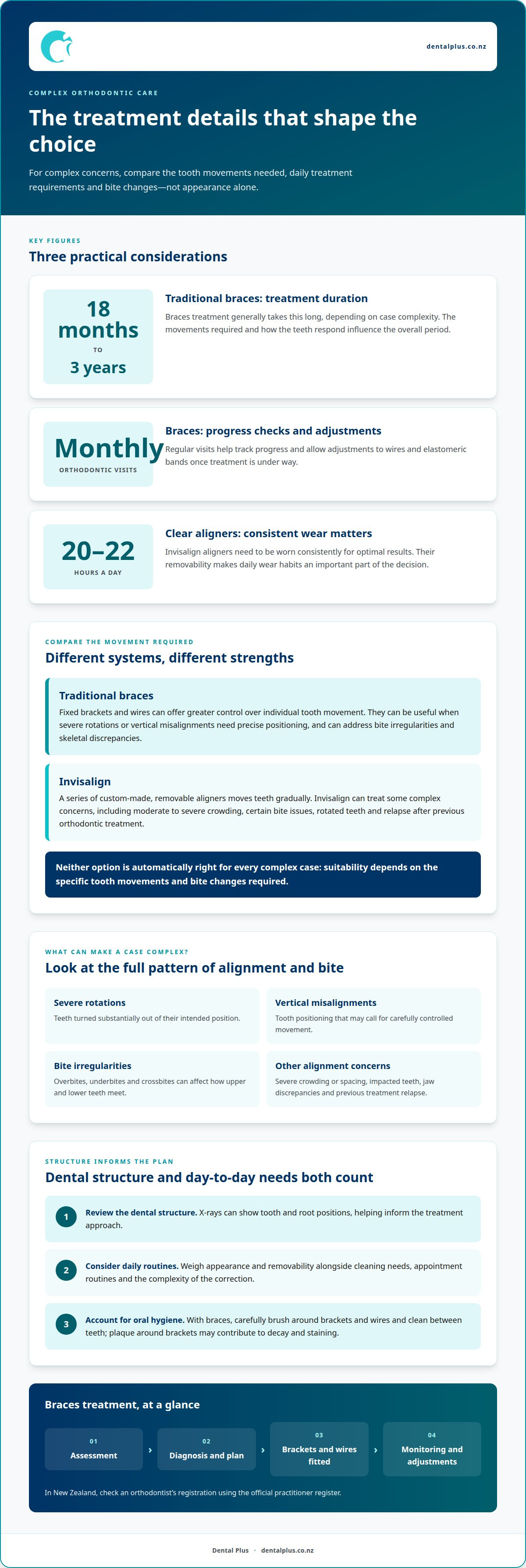
Traditional braces treatment generally takes 18 months to 3 years, depending on the complexity of the case. Regular monitoring helps track progress and allows adjustments to the wires and elastomeric bands. Braces typically require an orthodontic visit once a month for progress checks and adjustments. The specific movements needed and the response of the teeth influence the overall treatment period.
Braces can also bring risks and side effects. Plaque left around brackets may contribute to tooth decay and staining; root resorption, or shortening of a tooth’s root, is another potential concern during orthodontic movement. Careful monitoring and thorough cleaning help address oral-health concerns during treatment.
For meals and hygiene, choose foods that are easier to chew and avoid anything that could catch on or damage brackets. Brush carefully around each bracket and wire, and clean between teeth to remove plaque. Keeping teeth and gums clean helps reduce the risk of decay during treatment.
Braces treatment steps in New Zealand
Getting traditional braces generally involves an assessment, a diagnosis and treatment plan, fitting the brackets and wires, then regular monitoring and adjustments. The plan reflects the alignment and bite changes needed. For complex cases in New Zealand, check an orthodontist’s registration using the official practitioner register. Monthly visits support progress checks once treatment is under way.
Braces for severe rotations and bite irregularities
Severe rotations and bite irregularities can require carefully controlled tooth movement to improve alignment. Traditional braces and Invisalign can both address some complex concerns, but suitability depends on the specific movements required.
Severe rotations and misalignment
Severe rotations occur when a tooth turns substantially out of its intended position, while severe misalignment can involve several teeth. Traditional braces can correct severe rotations and vertical misalignments. This matters when a treatment plan needs to move individual teeth into precise positions, rather than simply improve the overall appearance of the smile.
For example, a visibly rotated tooth may sit out of line with neighbouring teeth, affecting how the upper and lower teeth meet. Fixed brackets and wires apply pressure to guide movement, giving braces control over individual tooth positions. The orthodontic plan considers how the affected teeth relate to surrounding teeth and the bite.
Bite irregularities and correction
A bite irregularity occurs when the upper and lower teeth do not meet as they should. Overbites, underbites and crossbites are examples; jaw discrepancies can also contribute. Traditional braces can work effectively for patients with skeletal discrepancies or bite irregularities, so bite correction can address function as well as tooth alignment.
Misaligned teeth can affect speech, chewing and oral health. For instance, a crossbite changes how teeth meet, while an overbite describes an overlap between the upper and lower teeth. The treatment approach depends on which teeth and jaw relationships need correction. These details help distinguish a local tooth-position concern from a broader bite issue.
Treating complex cases with metal braces
Traditional metal braces use brackets and bands attached to the teeth, connected by thin wires and elastomeric bands. The orthodontist adjusts these components to guide movement over time. This fixed system can provide detailed control of individual teeth, which is useful when severe rotation or vertical alignment needs attention.
Invisalign can also treat moderate to severe crowding, some bite issues such as open bite or deep bite, rotated teeth, and relapse after previous orthodontic treatment. Clear aligners are removable, but they must be worn consistently to work as planned. The key comparison is the movement needed, not whether one option is always more effective. A discussion of orthodontic treatment options can help relate these differences to a specific alignment concern.
Choosing treatment based on dental structure and lifestyle
Dental structure and daily habits both shape the choice between braces and clear aligners. Imaging, treatment goals, cleaning routines and payment preferences all contribute to a suitable plan.
Continuous treatment with fixed braces
Fixed braces stay attached to the teeth, so treatment continues without needing to remove the appliance for meals or brushing. This can suit someone whose routine makes consistent aligner wear difficult. Brackets and wires apply pressure to guide teeth, while progress checks allow adjustments as alignment changes.
That fixed design also affects everyday care. Food can catch around brackets, so brushing needs to reach each bracket and the gumline. People who often eat away from home may need to plan for cleaning after meals. By contrast, removable aligners can be taken out for eating and brushing, but depend on consistent wear.
Individualised treatment planning
An individualised plan accounts for dental health, the severity of misalignment and patient preferences. These factors matter together: a bite concern may call for different movements from a single rotated tooth, while existing dental needs can affect the order of treatment.
Imaging helps show the structures involved. X-rays can reveal tooth and root positions, while CT scans provide detailed images of the jaw and teeth. These views can help assess whether a concern involves tooth position, jaw structure or both. Severe bite problems or other structural issues may require jaw surgery as part of treatment.
Lifestyle adds another layer. Someone who values removability may prefer aligners, provided they can wear them consistently. A person who wants an appliance that stays in place may favour fixed braces. Cleaning around braces can be more demanding, so daily brushing and plaque removal are important when comparing routines.
Cost is another factor, but the treatment plan and its complexity influence what is required. The price depends on the case and is provided after a quote request; factors include the treatment approach, dental structure and imaging needs. Dental Plus offers Qcard and Afterpay as payment options. Considering these alongside daily care needs can help patients weigh their choices without making price the sole deciding factor.
For example, a patient with a jaw discrepancy who finds it difficult to wear aligners consistently has different planning considerations from someone with a mild alignment concern and a consistent routine. The treatment approach should reflect those differences. A careful assessment links dental findings to the movements required, then considers which appliance best fits the patient’s preferences and daily habits.
Choosing an adult braces option
For adults considering tooth straightening, the choice involves more than how an appliance looks. Traditional metal braces use brackets and bands attached to the teeth, connected by thin metal wires and elastomeric bands. Clear aligners can be removed for eating and brushing. Each option brings different routines, cleaning demands and treatment considerations.
Metal braces have remained a popular orthodontic choice for over 100 years. Their fixed design means they stay on the teeth throughout treatment, rather than being taken out for meals. That can suit an adult who prefers not to manage a removable appliance during a busy workday. It also means food choices and cleaning habits need attention around brackets and wires.
Removability can make clear aligners convenient at mealtimes and during brushing. However, the wearer needs to manage when the aligners are out and follow the prescribed wear routine. For an adult with a schedule involving frequent meals or meetings, that daily responsibility may influence which option feels practical. The planned tooth movements remain central to the choice.
Cleaning deserves particular thought with fixed braces. Brackets and wires can make brushing around teeth more difficult, and plaque buildup may cause staining and tooth decay. A useful daily routine includes carefully brushing around each bracket and cleaning between teeth. Adults who already find thorough cleaning difficult should consider how an appliance could affect that routine.
Appearance can also shape an adult’s preference. Brackets and wires are visible, while clear aligners can be removed for specific occasions. Yet discretion alone doesn’t determine suitability: the tooth movements needed and any bite concerns must also be considered. A preference for a removable option needs to fit the treatment plan and the wearer’s ability to follow its instructions.
Cost may form part of the comparison. Clear-aligner treatment can cost more than traditional metal or ceramic braces, so the overall treatment plan and personal priorities both matter. The practical choice is not necessarily the least visible appliance or the one that seems easiest at first. Consider cleaning, removability, visibility and the planned correction together.
The best adult option balances the required straightening with realistic habits. A careful comparison considers how brackets affect cleaning, how removable aligners fit into daily life, and which approach suits the planned tooth movement. Appearance is part of the decision, but not the only factor guiding treatment.
Comparing braces and Invisalign for complex cases
For complex treatment, metal braces, ceramic braces and clear aligners differ in how they guide movement and fit daily life. Traditional metal braces can provide greater control over individual tooth movement than Invisalign, while aligners can treat several crowding and bite concerns. The treatment goal determines which difference matters most.
Metal braces use brackets, bands, wires and elastomeric bands to guide teeth. Their fixed position means they don’t depend on the wearer remembering to put them back after meals. That can be useful when the plan calls for controlled movement of individual teeth, such as correcting severe rotations or vertical misalignment. Regular adjustments help direct progress towards the planned alignment.
Ceramic braces are another fixed-brace option, with brackets made from ceramic rather than metal. Their fixed design distinguishes them from removable aligners, while the bracket material changes the appliance’s appearance. The treatment choice should still be based on the tooth movements required. A less noticeable bracket material does not, by itself, determine how effectively a complex bite can be corrected.
Invisalign uses a series of custom-made aligners to move teeth gradually. It can treat moderate to severe crowding, some bite issues such as open bite or deep bite, rotated teeth, and relapse after earlier orthodontic treatment. Aligners are removable for eating and brushing, but optimal results require wearing them for 20-22 hours a day. That routine is a practical part of the comparison.
Cost is another consideration, but it should be weighed alongside treatment needs and daily habits. Clear-aligner treatment can cost more than traditional metal or ceramic braces. When comparing options, consider how the treatment plan, appliance and wear routine fit together, rather than which appliance seems easiest at first glance.
Comfort also matters in everyday life, but it isn’t a substitute for suitable tooth movement. Fixed braces remain in place during meals and cleaning, while removable aligners can be taken out for both. Each has practical demands: braces require careful cleaning around brackets, and aligners require consistent wear. Thinking through a typical day, including meals and brushing, can make those trade-offs clearer.
A useful comparison starts with the planned correction, then considers visibility, removability, cleaning and wear consistency. For example, a treatment plan requiring precise movement of individual teeth can make braces’ control relevant; a patient whose concern suits aligners must also be able to keep them in consistently. Discuss the movements, bite goals and appliance routines together before choosing. Discuss braces and Invisalign options to consider which approach fits your treatment needs.
Dental Plus: Professional Dental Hygiene
Dental Plus offers Professional Dental Hygiene to help patients maintain clean teeth and gums during orthodontic treatment. Brackets and wires can make plaque removal more challenging, so regular hygiene care can complement careful brushing at home. Routine Check Ups and Digital X-Rays are also available as part of ongoing dental care, while Digital Smile Design (DSD) helps explore smile goals. These services support different needs; hygiene care is particularly relevant for patients who want help maintaining oral health while wearing braces.
If you’re considering braces or already wearing them, contact Dental Plus to discuss your dental care.
Take the next step towards a treatment plan
Choosing an orthodontic approach becomes clearer when you identify what matters most to you. Before discussing traditional braces for complex cases, note the concerns you want addressed, the routines you can maintain and any questions about appearance or comfort. These priorities give the conversation a practical starting point.
The treatment option needs to match the tooth movements required, as well as your preferences and daily habits. A discussion can connect those factors and explain how each approach relates to your goals. You don’t need to arrive with a decision already made; understanding the choices is part of making one with confidence.
If you’re ready to talk through your orthodontic options, contact Dental Plus to discuss treatment. A considered first conversation can help you move towards care that feels right for your needs and your life.
Frequently Asked Questions
What Are Traditional Braces?
Traditional braces are fixed orthodontic appliances that use brackets and bands attached to the teeth, joined by thin wires and elastomeric bands. These components apply pressure to guide teeth towards planned positions. Because the appliance stays in place, it works throughout the day rather than being removed for meals. For example, a bracket can help guide a rotated tooth as the surrounding alignment changes.
What complex bite and tooth problems can braces correct?
Braces can address severe crowding or spacing, rotated or impacted teeth, and vertical misalignment. They can also help correct overbites, underbites and crossbites, including cases involving skeletal discrepancies. These concerns can affect how teeth meet during chewing, and misalignment can also affect speech or oral health. A previous orthodontic relapse, where teeth have shifted after earlier treatment, is another example of a complex concern.
When are traditional braces recommended over clear aligners for complex cases?
Traditional braces may be preferred when the plan needs greater control over individual tooth movement, such as correcting severe rotations or vertical misalignment. Invisalign can also treat moderate to severe crowding, some bite problems, rotated teeth and orthodontic relapse. The comparison depends on the movements required, not simply whether a case is labelled complex. For instance, a specific tooth position may influence appliance choice more than overall appearance.
How long does treatment with braces usually take for complex cases?
Traditional braces treatment generally takes 18 months to 3 years, depending on case complexity. A plan involving several tooth movements or bite correction may require a different treatment period from one addressing a smaller alignment concern. Progress is reviewed during treatment, and adjustments help guide teeth towards their planned positions. Keeping appointments and following care instructions helps treatment proceed according to the orthodontic plan.
How much do traditional braces cost in New Zealand for complex cases?
The price depends on the case and is provided after a quote request. Factors include the complexity of the tooth and bite corrections, the treatment approach and the expected duration. A complex plan can involve different requirements from one focused on a limited alignment concern, so a general figure may not reflect an individual’s treatment. Ask Dental Plus for a written breakdown of the proposed care and payment arrangements.
Are orthodontic braces covered by insurance or public funding in New Zealand?
Insurance cover depends on your policy; Dental Plus accepts most major dental insurance plans, not all. WINZ assistance is for eligible urgent or essential dental needs, so don’t assume it will fund braces. Eligibility includes NZ citizenship or permanent residency, age 16 or older, and an income-and-assets assessment. Check whether any funding is available before booking or starting treatment. A consultation fee applies and may be reimbursed if approved.
How often are adjustment appointments needed, and what happens at each visit?
Traditional braces typically require an orthodontic visit once a month for progress checks and adjustments. At these visits, the orthodontist reviews tooth movement and adjusts the wires and elastomeric bands to guide the next stage. For example, they can check whether a rotated tooth is following its planned path. Regular reviews also give the care team an opportunity to assess the braces and discuss any concerns with cleaning or comfort.


Comments